The Best Commercial Cannabis Grinders for Pre-Rolls (2026 Buyer’s Guide)
The Secret to World-Class Pre-Rolls Starts With the Grind
A good pre-roll starts long before the flower reaches a cone.
Pre-rolls have become the largest cannabis category in the U.S., reaching $3.6 billion in sales and 383 million units according to 2026 Headset data reported by Custom Cones USA. Unit sales grew 18.6% while the overall cannabis market grew just 1.5%. With that much product moving through dispensaries, small production inconsistencies can quickly become expensive problems.
One of the biggest variables is the grind. Particle size affects how flower moves through production equipment, how evenly a pre-roll packs, how much resistance it has when smoked, and how consistently it burns.
One thing worth clarifying up front: RollPros does not manufacture a commercial cannabis grinder. We build automated equipment that takes prepared flower and turns it into finished pre-rolls. That means we see plenty of flower coming from other companies’ grinders—and we see what happens downstream when that grind is inconsistent.
This guide covers what cannabis brands, MSOs, co-packers, and pre-roll manufacturers should look for in a grinder, including particle size, throughput, equipment type, cleaning requirements, and how to match a grinder to the rest of your production line.
Why Grind Quality Decides Pre-Roll Quality

The grinder establishes the raw material that every downstream process has to work with.
If particle size varies too much, finished pre-rolls can develop common performance problems like canoeing, hot spots, loose packs, plugged draws, and inconsistent fill weights. Those issues become even more noticeable once production is automated because equipment performs best when the material feeding it remains predictable.
Poor grind consistency also has a direct cost.
Every rejected pre-roll can represent wasted flower, paper, labor, production time, and packaging. Multiply that across thousands of units and small inconsistencies become meaningful losses.
The goal of a pre roll grinder is not simply to make flower smaller. It should produce a consistent particle size while limiting unnecessary heat, fines, and trichome loss.
That consistency helps maintain predictable airflow, packing density, and burn characteristics from batch to batch.
What Grind Size Should You Target for Pre-Rolls?
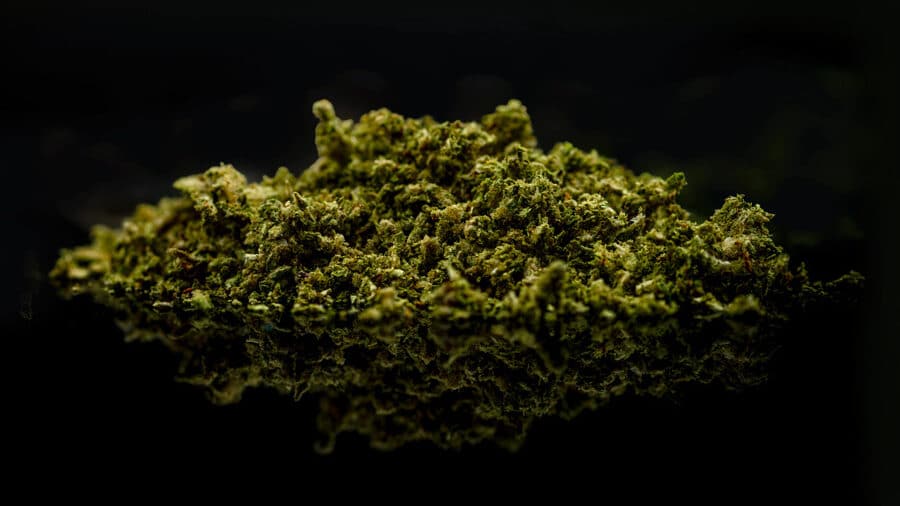
For most commercial pre-roll production, 3–5 mm is a good target particle size.
Testing from GreenBroz found that flower processed around 3 mm produced a more even burn, while STM Canna recommends roughly 4–5 mm as a useful range for balancing airflow and combustion. Milling studies across much broader particle-size ranges have reached a similar conclusion: going too fine or too coarse can create problems.
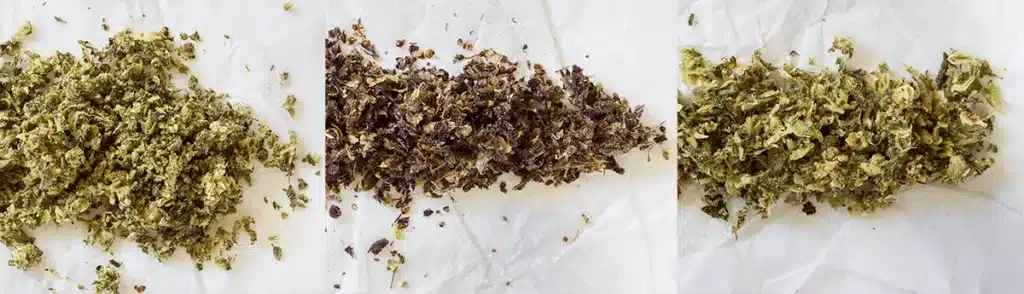
Flower below roughly 2–3 mm starts behaving more like powder. It can compact tightly, restrict airflow, increase draw resistance, and contribute to hot spots or side-burning.
Going too coarse creates the opposite issue. Larger pieces leave inconsistent air pockets inside the pre-roll and can result in loose packs, uneven density, variable burn rates, and poor fill-weight accuracy.
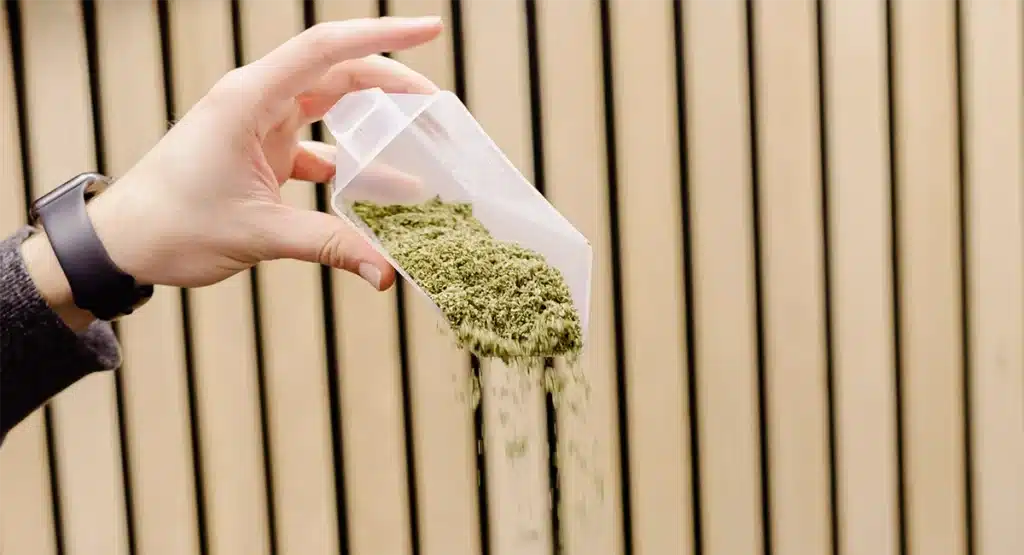
Grind size also depends on your filling equipment
The right particle size isn’t determined by the grinder alone.
Automated fillers often have their own preferred material ranges. Some systems work with approximately 1–5 mm flower, while others target closer to 2.5 mm through a specific screen.
That’s why grinder and filler selection should happen together whenever possible. A grinder can produce beautiful flower, but if the material doesn’t move consistently through the next machine, you’ve simply moved the production problem downstream.

Moisture matters too
Particle size is only part of the equation.
Flower around 55–62% relative humidity, or roughly 10–12% moisture content, generally grinds and burns more predictably. Flower that’s too dry can create excess fines and loose kief, while overly wet flower tends to clump and stick to screens.
Operators also need to understand screen terminology. When screening kief, an 80–100 mesh screen has smaller openings than a lower mesh number. Higher mesh numbers mean smaller openings not larger particles.
Getting particle size, moisture, and screen selection right gives the rest of the production line much more consistent material to work with.
Commercial Grinder Technologies and Their Trade-Offs
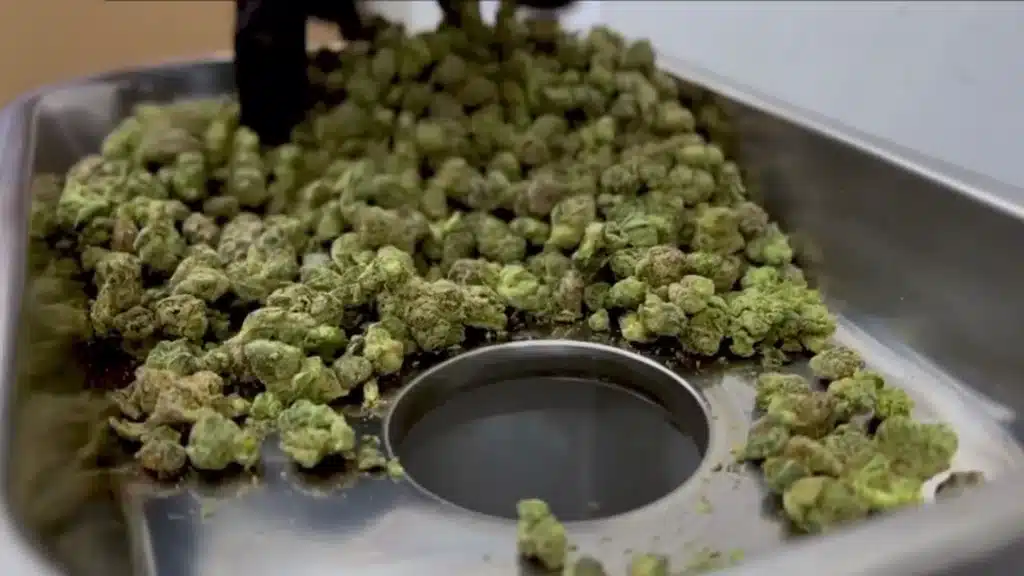
Not every pre roll shredder breaks flower down the same way. Different designs prioritize speed, particle control, cleanability, or trichome preservation.
Blade and whip shredders
Machines like Futurola’s commercial cannabis shredders use rotating nylon whips to break flower apart quickly. They’re fast and relatively affordable for the amount of material they can process.
The trade-off is friction. Higher operating speeds can create more heat and knock loose more trichomes, while facilities with strict material-contact standards may also want to evaluate the use of nylon components in the product path.
Screen mills
Screen-based systems, including machines from Mobius and Tom’s Tumble Trimmer, force flower through a controlled opening to produce a repeatable particle size.
They’re well suited to high-volume production and offer strong particle control, although pushing material through a screen creates more rubbing and compression than some gentler grinding methods.
Paddle-and-screen grinders
The GreenBroz Model G uses low-speed paddles to move flower against interchangeable screens rather than chopping it with blades.
The approach generates less heat and can help keep stems intact for easier removal. For brands prioritizing flower quality and trichome preservation, paddle systems offer an attractive middle ground between hand grinding and aggressive industrial milling.
Scissor-cut grinders
STM’s Revolution 2.0 uses opposing stainless-steel blades operating at relatively low speed. The goal is to cut rather than pulverize flower, limiting unnecessary heat while maintaining commercial throughput.
Hammer mills
Hammer mills from companies like Fitzpatrick, KannaMill, and Hippo are designed for biomass and extraction feedstock.
They’re capable of extremely high throughput, but that doesn’t make them an ideal pre roll grinder machine. Aggressive milling can produce too many fines and create more trichome disruption than most premium flower applications require.
Cryogenic milling
Cryogenic equipment cools material with liquid nitrogen before milling, often operating in the range of roughly -40°C to -80°C. This approach is useful for fresh-frozen flower, solventless products, and other applications where preserving delicate compounds is especially important.
For standard dried pre-roll flower, it’s generally more processing capability than most facilities need.
Across all of these technologies, the basic principle is the same: RPM and friction create heat, and excess heat can cost you terpenes and trichomes. Low-RPM, high-torque systems with controlled screen sizes are popular because they reduce that stress while still delivering consistent material.
Commercial Cannabis Grinder Comparison: Specs, Throughput and Price
Throughput matters, but the biggest machine isn’t automatically the best investment. The right cannabis grinder machine should match your actual production volume, particle-size requirements, sanitation procedures, and downstream equipment.
Manufacturer-reported throughput can also vary depending on flower density, moisture, screen size, and feeding rate, so these figures should be treated as operating ranges rather than guarantees.
| Machine | Mechanism | Throughput | Screens / Particle Size | Materials | Price | Best For |
| Sensi Shredder Pro | Low-RPM shredding | Approx. 1–2 lbs/min | Small, medium and large; large approx. 1/4″ | Food-grade stainless and aluminum | Contact vendor | Craft and growing brands |
| STM Revolution 2.0 | Dual scissor-cut blades | 30–60 lbs/hr | Fine and coarse screens | 304 stainless | Approx. $22,950 | Mid/high-volume production |
| Mobius M210 | Screen milling | 35–200 lbs/hr | Seven screen options | Stainless steel | Contact vendor | High-volume production |
| GreenBroz Model G | Paddle-and-screen | Up to 100 lbs/hr | 3, 4 and 4.75 mm | Stainless steel | Contact vendor | Premium flower production |
| Futurola Mini | Nylon whip shredder | 0.7 lb/7-sec cycle | Fixed shredding system | 304 stainless / Nylon 6 | Approx. $3,750+ | Smaller operations |
| Futurola Mega | Nylon whip shredder | 5 lbs/7-sec cycle | Fixed shredding system | 304 stainless / Nylon 6 | Approx. $11,250 | High-throughput shredding |
| Tom’s Python 500 | Screen milling | Up to 200 lbs/hr | Configurable; cryo-capable | GMP-oriented construction | Contact vendor | Large-scale manufacturing |
There isn’t one clear winner here.
Sensi and Futurola offer practical options for teams that don’t need a large industrial mill. GreenBroz and STM put more emphasis on controlled processing and flower quality, while the Mobius M210 and Python 500 are designed for much higher production volumes.
The more useful question is whether the grinder fits the rest of your operation.
Which Grinder Fits Your Operation?
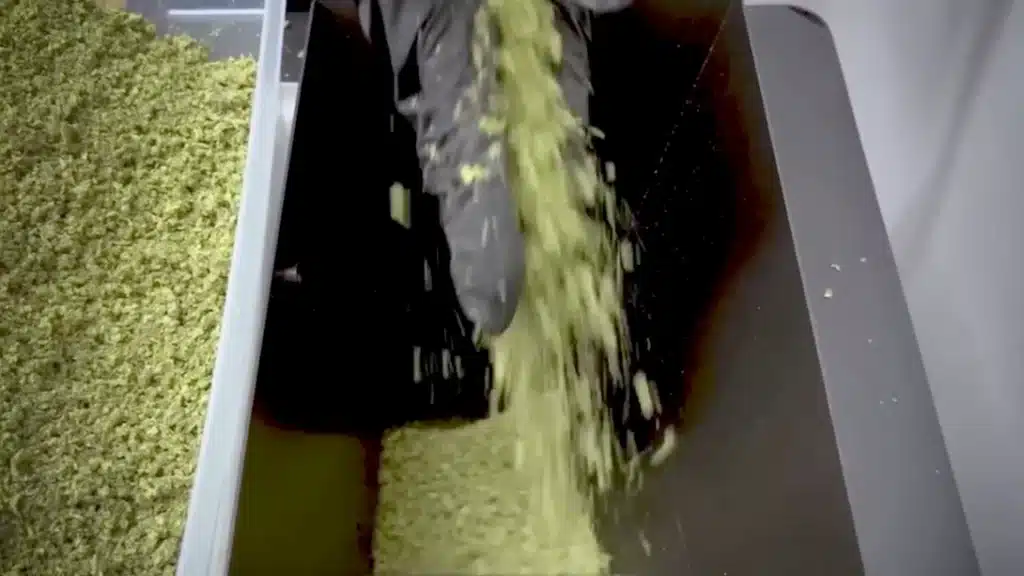
When choosing the best grinder for pre-rolls, start with how much flower you’re actually processing, not how much you hope to process three years from now.
Craft and boutique production
For operations producing under roughly 5,000 pre-rolls per week, machines like the Sensi Shredder Pro or Futurola Mini generally provide plenty of capacity without requiring a major industrial footprint.
At this stage, the biggest improvement is often getting employees away from small-batch or manual grinding while establishing a repeatable screen size and process.
Mid-size brands and single-state operators
The GreenBroz Model G, STM Revolution 2.0, and Mobius M60 make more sense when production runs consistently throughout the week.
Here, throughput starts to matter more, but so do changeover time, cleaning, and integration with filling equipment.
If you’re planning a high-volume pre-roll production facility, calculate capacity across the whole line rather than looking at each machine independently.
High-volume co-packers and MSOs
Operations processing large quantities of flower may need the capacity of the Mobius M210 or Tom’s Python 500.
At this volume, reliability and downtime can matter more than the initial equipment price. Cleaning time, screen changes, replacement parts, operator training, and maintenance should all be part of the buying decision.
Extraction and biomass
For biomass headed to extraction, industrial hammer mills are usually the better tool.
For premium pre-roll flower, they’re typically overkill. A machine designed to produce a controlled 3–5 mm grind is usually a better fit.
Cleaning, Sanitation and GMP Compliance

A grinder can look great on a specification sheet and still become a headache if your production team can’t clean it efficiently.
Cannabis resin builds up on blades, screens, paddles, seals, and corners. Tool-free disassembly makes it easier to remove that buildup between strains and production runs instead of turning sanitation into an hours-long project.
Material-contact surfaces should also fit your facility’s standards. Common acceptable materials include 304 or 316 stainless steel, glass, silicone, certain food-grade plastics, and in some applications anodized aluminum.
Under GMP-oriented production, cleaning should follow documented SOPs and batch records rather than depending on operator memory. Cross-contamination is one concern, but microbial risks such as Aspergillus and E. coli make sanitation a product-safety issue as well.
Washdown-rated components can make this much easier. GreenBroz, for example, uses an IP65-rated motor, while other cannabis milling equipment is designed around food or pharmaceutical sanitation standards.
Whatever machine you choose, make sure it fits into your larger compliant pre-roll production workflow before installation.
Why You Should Never Use a Food Grinder for Cannabis
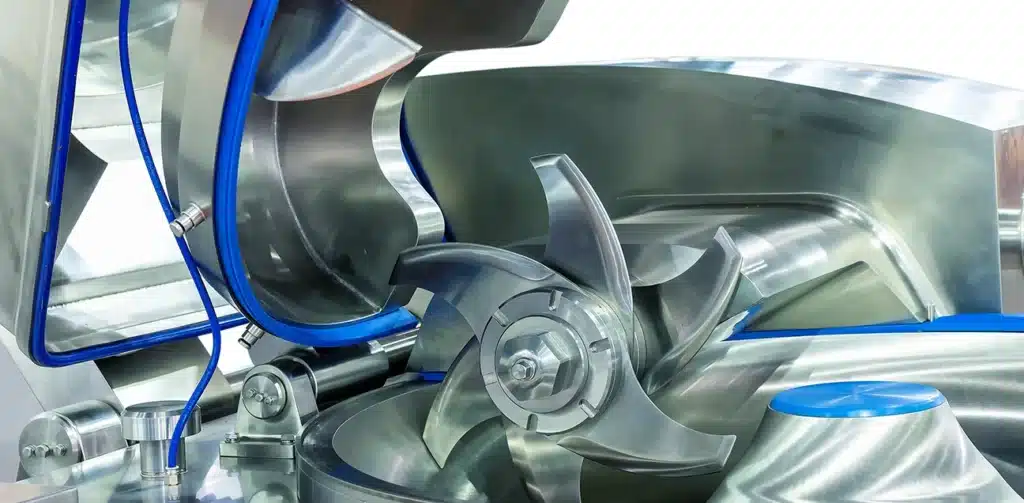
A commercial food processor can break flower into smaller pieces. That doesn’t mean it belongs in pre-roll production.
High-speed food grinders can create heat, powder, and inconsistent particle sizes. Heat can accelerate terpene loss, aggressive blades can knock trichomes loose, and excessive fines can restrict airflow once the flower is packed into a joint.
Cleanability is another concern.
A machine being food-grade doesn’t automatically mean every surface is accessible enough for a regulated cannabis facility. Operators still need to evaluate product-contact materials, resin buildup, replacement parts, sanitation procedures, and the ability to document cleaning.
Saving money on a grinder isn’t much of a savings if the machine costs you flower, labor, production time, and finished-product quality.
The Grinder Is Only Half the System
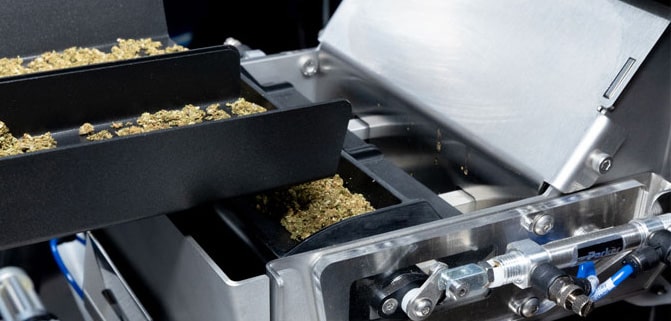
A perfect 4 mm grind doesn’t guarantee a good pre-roll.
Once flower leaves the grinder, the filling process has to maintain the consistency you’ve created. Particle size affects how material moves through equipment, how evenly it packs, whether finished units reach target weight, and how much resistance consumers experience when they take a draw.
This is the part of the process RollPros focuses on.
The Blackbird pre-roll machine takes prepared flower and forms finished pre-rolls using radial compaction rather than relying on traditional gravity-fed cone filling.
The key is matching the grind to the filling process. Consistent material helps improve fill weight, density, cone integrity, airflow, and finished-unit repeatability.
Quality control closes the loop.
Two pre-rolls can weigh exactly the same and still draw very differently. Particle size, moisture, packing density, and material distribution all influence airflow.
The DrawCheck gives production teams a way to measure draw resistance instead of relying on someone smoking or test-pulling random units.
That feedback can help operators identify whether changes in grind size, moisture, or machine settings are affecting the finished product.
The grinder determines the material. The filling machine turns it into a pre-roll. QC tells you whether the entire process worked.
Packaging and Freshness After the Grind

Grinding increases the amount of flower exposed to air, which makes moisture control even more important once production begins.
Flower can enter the grinder at the ideal moisture content and still dry out if finished pre-rolls sit exposed to production-room air for too long.
Moving finished units efficiently into protective pre-roll packaging helps limit unnecessary exposure to oxygen, light, and changing humidity.
Packaging also needs to account for child resistance, compliance, shelf life, production speed, and sustainability requirements.
The main point is simple: grind, fill, QC, and packaging should function as one production process rather than four unrelated steps.
Making the Decision
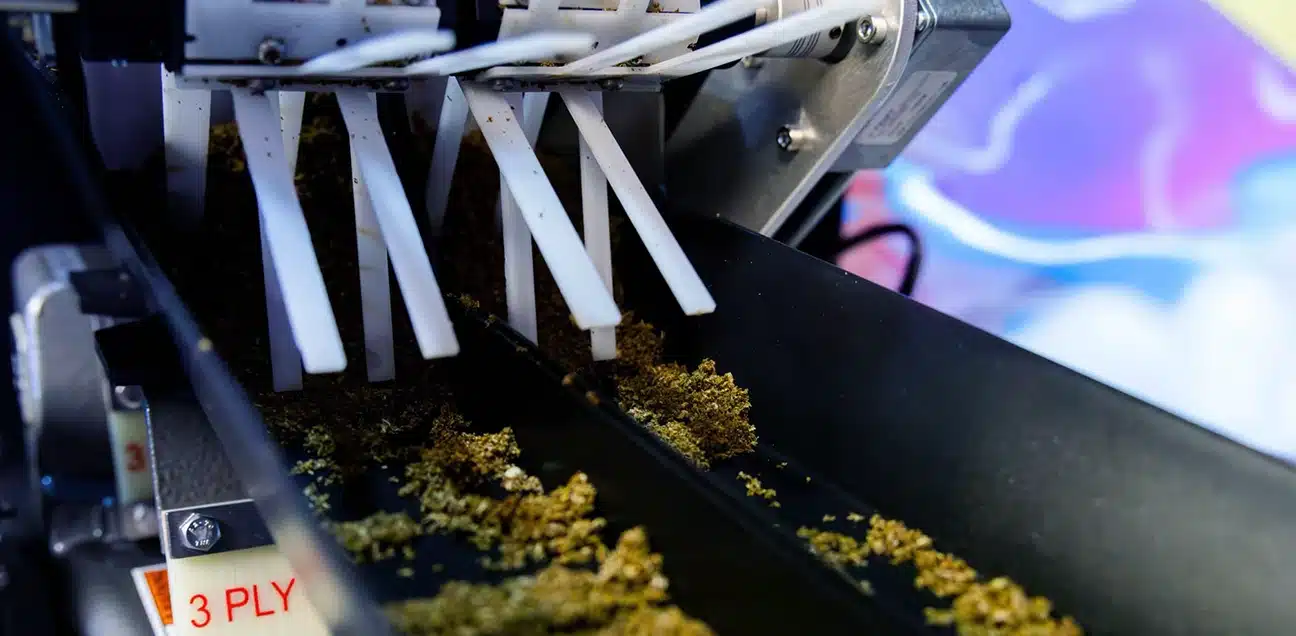
Choosing a commercial cannabis grinder comes down to a few practical questions.
Start with a 3–5 mm target particle size, match throughput to your real weekly production volume, and pay close attention to heat generation, screen options, contact materials, and cleaning access.
Then look downstream.
If your grinder can process 100 pounds per hour but the rest of the production line can’t use that material efficiently, additional grinder capacity won’t improve finished output.
The best setup is the one that keeps material consistent from whole flower through the finished pre-roll.
If you’re evaluating automated production, you can book a live demo and request a quote to see how grinder output performs through the next stage of the line.
Frequently Asked Questions
A particle size between 3 mm and 5 mm is generally best for commercial pre-roll production. That range provides a good balance between airflow, packing density, and even combustion. Going much finer can increase draw resistance and create excess powder, while coarse flower tends to pack inconsistently.
Work backward from weekly unit output. For example, 10,000 one-gram pre-rolls require about 22 pounds of flower before accounting for production loss. If that flower needs to be processed in two hours, your grinder needs considerably more capacity than an operation spreading the same volume across several days. Always leave additional capacity for cleaning, changeovers, downtime, and growth.
They can. Heat, friction, and RPM are the main variables. High-speed grinding can create more friction and knock trichomes loose. Low-RPM systems reduce that stress, while cryogenic milling goes further by keeping material extremely cold during processing. Specific preservation percentages should be treated as manufacturer claims unless independently verified.
The terms overlap. A cannabis grinder typically cuts or breaks flower into a target size. A commercial cannabis shredder often uses whips or similar components to break material apart quickly. A mill generally relies more heavily on screens or milling chambers to control finished particle size. Because manufacturers use the terms differently, mechanism, RPM, screen size, and finished particle size matter more than the name.
Usually, no. An industrial cannabis grinder or hammer mill designed for hemp biomass prioritizes extremely high throughput. That’s useful for extraction feedstock but can create too many fines and cause unnecessary trichome loss when processing premium pre-roll flower. For smokable flower, controlled particle size matters more than maximum throughput.
At minimum, clean between strains or batches where cross-contamination needs to be avoided. High-volume facilities may need additional cleaning based on resin buildup and production volume. The best approach is a documented cleaning SOP based on manufacturer recommendations, facility requirements, and applicable GMP standards. If resin buildup begins affecting particle size or restricting screens, the machine has already gone too long between cleanings.
No. RollPros does not manufacture commercial cannabis grinders. We build the equipment that runs downstream of them. The Blackbird takes properly prepared flower and turns it into finished pre-rolls, while DrawCheck gives manufacturers a way to measure draw resistance as part of quality control. That means the goal isn’t to sell you a particular grinder. It’s to make sure the grind you choose works with the rest of your production process.