
The Real ROI of an Automated Pre Roll Machine
Pre roll production efficiency is no longer a secondary concern as the cannabis industry expands. Pre-rolls are quickly taking over as one of the fastest growing product categories in the United States. Some markets have reported that they account for 15-20% of their total sales. Using manual labor to meet that demand alone can create bottlenecks, inconsistent output, and rising operations costs. Systems like an automated pre roll machine offer a path to scale production without sacrificing quality or control.
This guide walks through the real roi of pre roll machines by breaking down how automation improves throughput, reduces labor dependency, and stabilizes product quality within automated cannabis production environments. It also outlines the true cost savings from initial investment to long-term operational gains with pre roll machines. Understanding the relationship between cannabis pre roll automation and profitability is critical for manufacturers to be able to make informed decisions that support both short-term output and long-term growth.
Why Automated Pre Roll Machines Matter for Cannabis Manufacturers

Demand, competition, and tightening margins are all factors driving the shift towards automation in cannabis manufacturing. Multi-state operators are having to produce tens of thousands of pre rolls per day to keep up with the demand. Single dispensaries can sell out thousands of per-rolls per week alone. Automated pre roll machines are a critical asset for scaling operations since manual processes struggle to keep pace.
Pre roll production efficiency is directly improved by cannabis pre roll automation by increasing output while maintaining uniformity. Even the most well trained team can only hand-roll 300 to 500 units per hour, while automated systems can exceed anywhere between 2,000 to 5,000 units in the same time frame. The difference quickly compounds across shifts and production cycles.
The cost of labor is another major factor. Manual production typically means stacking a room full of people just to keep up. Automation allows operators to shift their workers into areas that actually move the business forward like quality control, packaging, and compliance. At the same time, automated systems keep things tight from batch to batch, dialing in consistent fill weights and solid structure without the guesswork.
Automation delivers the most long-term value in scalability. As demand continues to increase, manufacturers can expand their production without exponential increases in labor or overhead. This ability to scale efficiently gives businesses a competitive edge in both emerging and mature markets.
Key Benefits of Automated Pre Roll Machines

Simple output gains are not the only benefits of automated pre roll machines. Systems like these can create production environments that are more controlled, predictable, and productible.
Key advantages include:
- Reduced labor costs
Labor requirements can be cut by 50% with automation. A process that once took 10 people can now be managed by 2-3 operators overseeing their equipment. - Faster production speeds
Hourly output can increase significantly with pre roll production automation. Manufacturers can meet wholesale and retail demand consistently when using high-capacity systems that produce tens of thousands of units per shift. - Improved consistency and quality
The consistency with fill weights, density, and structure all reduce product returns and strengthen a brand’s reliability. - Enhanced regulatory compliance
An automated system’s precise measurements and tracking capabilities help to ensure compliance with state regulations related to weight tolerances and product labeling. - Reduced material waste
Overfilling and spillage are minimized by accurate dosing , which can save thousands of dollars in raw material costs over time.
These are only a few of the cannabis pre roll machine benefits that can collectively improve operational stability. Manufacturers can focus on optimizing supply chains, branding, and distribution strategies with fewer variables in production.
Calculating the ROI of Automated Pre Roll Machines
You need a clear comparison between upfront investment and ongoing savings in order to understand the cost savings with pre roll machines. Even with the initial cost of a machine ranging from $50,000 to $500,000, you can typically justify the expense based on the long-term financial impact.
Key components of ROI include:
- Labor savings
A company can save $200,000 annually if they reduce their workforce by five employees at an average cost of $40,000 per year. - Increased production output
Businesses can capture additional market share and fulfill more orders with higher throughput. Increasing from 5,000 hand rolls to 20,000 automated rolls in one day can significantly boost revenue. - Reduced waste and rework
Unsellable products can range from 2% to 10% in manual operations, and consistent production lowers that percentage. - Lower overhead costs
Streamlined workflows reduce the need for large production spaces and extensive supervision.
Depending on production volume, the roi of automated pre roll machines typically becomes evident within 6 to 18 months. Facilities with higher output often see faster returns on their cannabis pre roll machine investment due to the scale at which they’re operating. In turn, smaller producers may take longer, but can still benefit from improved efficiency and product quality.
Check out our ROI Calculator that helps you get an idea of how long it would take to pay off our automated pre-roll machine.
Choosing the Right Automated Pre Roll Machine for Your Needs
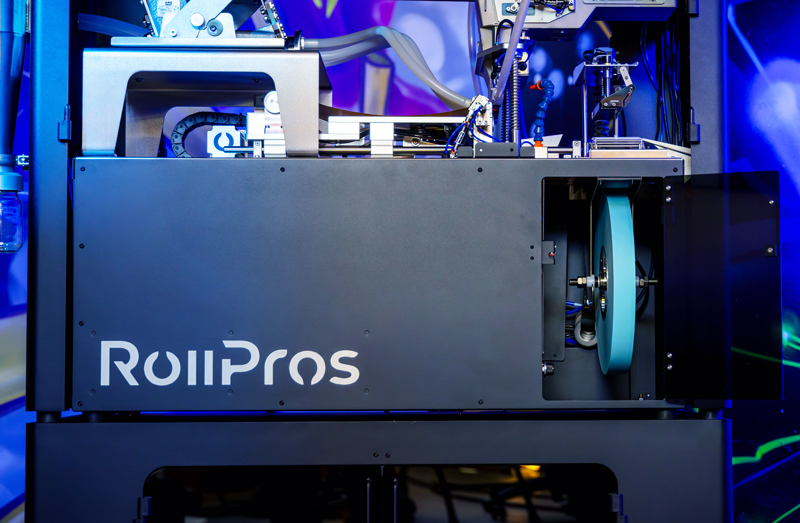
A clear understanding of your production goals, workflow, and long-term growth plans are essential when choosing pre roll machines. A thoughtful automated pre roll machine selection ensures that your investment supports both future expansion and current demand. Not all systems are created equal as they’re all put together for different output levels. Realizing those operational needs and aligning equipment is essential for maximizing efficiency.
When evaluating options, consider the following factors:
- Production capacity
Assess your current output vs your project output. Smaller operations might only need 1,000 units per hour, while high-volume facilities may require 5,000+ to stay competitive. - Machine reliability
Utilizing equipment with a strong track record helps to reduce downtime and maintain steady production as having a consistent performance is critical. - Flexibility
Brands can diversify their product offerings without any additional equipment if they purchase a machine that supports different pre-roll sizes and materials. - Ease of integration
Grinding, filling, and packaging processes should be able to work seamlessly with the automated system to avoid workflow disruptions. - Manufacturer support
Any cannabis pre roll machine buying guide should go over essential components like reliable service, training, and access to replacement parts.
A strategic approach to machine selection will ensure better performance, improved efficiency, and long-term scalability.
How Automated Pre Roll Machines Improve Cannabis Production Consistency
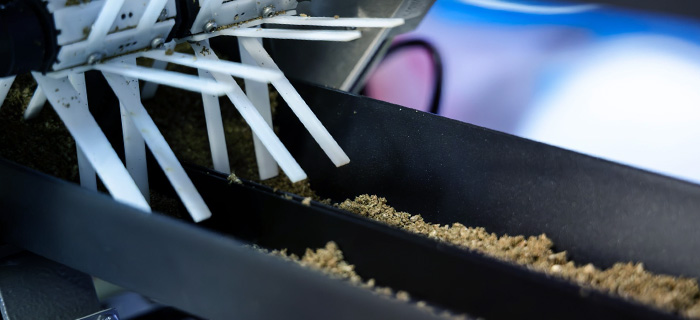
Pre roll machine consistency is one of the most important factors in pre-roll production. Even the smallest variation in weight or density can affect burn rate and overall satisfaction when customers are expecting each product to deliver the same experience.
This challenge can be addressed by standardizing every step of the automated cannabis production process. The level of accuracy in which machines are calibrated is difficult to achieve consistently with manual labor. Machines deliver precise material, often within a tolerance of ±0.02 grams.
Pre roll production consistency also improves quality control. Products that are created with uniformity are easier to inspect, package, and label. This reduces the likelihood of running into any compliance issues. Precision like this also helps to avoid costly penalties and product recalls recalls in a regulated market.
A common source of variability is human error, which automation can help to reduce. When going the manual route, things like fatigue, difference in technique, and inconsistent packing methods can all impact output quality. Removing these variables with automation will create a more reliable production environment as a whole.
The result? A product that meets both regulatory standards and customer expectations. Consistency like this not only strengthens brand reputations, but also encourages repeat purchase.
Long-Term Savings and Efficiency with Automated Pre Roll Machines
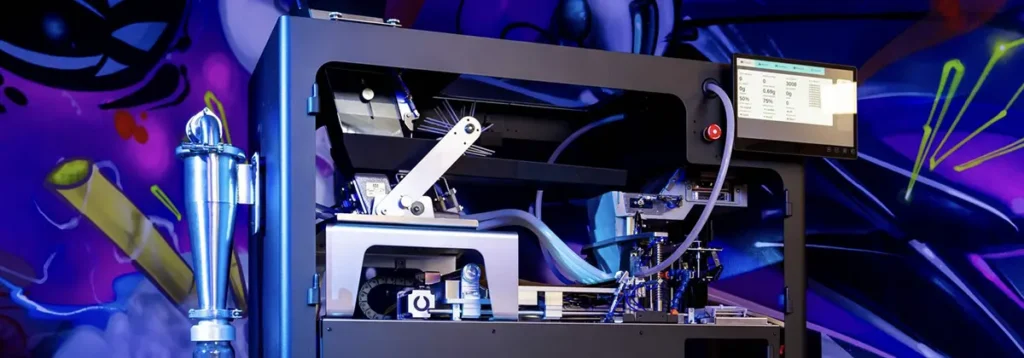
Automation provides long-term financial benefits that extend well beyond the initial ROI calculations. Over time, there is a cost reduction with automated systems that help to create a more efficient and scalable operation.
Some of the key areas of long-term savings with pre roll machines include:
- Reduced labor expenses
One of the largest ongoing costs in manufacturing is labor, and automation helps to stabilize those expenses as well as protect against wage increases. - Improved production speed
Brands can increase revenue potential without expanding their facility size with a faster output, meaning more product in less time. - Lower downtime
Overall efficiency can be improved with modern systems that provide continuous operation with minimal interruptions. - Scalability
Businesses can increase their output without proportionally increasing costs as their demand continues to grow. - Integration with existing systems
Efficiency can be enhanced without requiring a complete operations overhaul when automated equipment is incorporated into current workflows.
Resource allocation is better supported with pre roll automation efficiency. It allows teams to better focus on higher-value tasks such as quality assurance, logistics, and product development. A shift like this not only improves overall business performance, but their competitiveness as well.
The Future of Cannabis Pre Roll Production with Automation
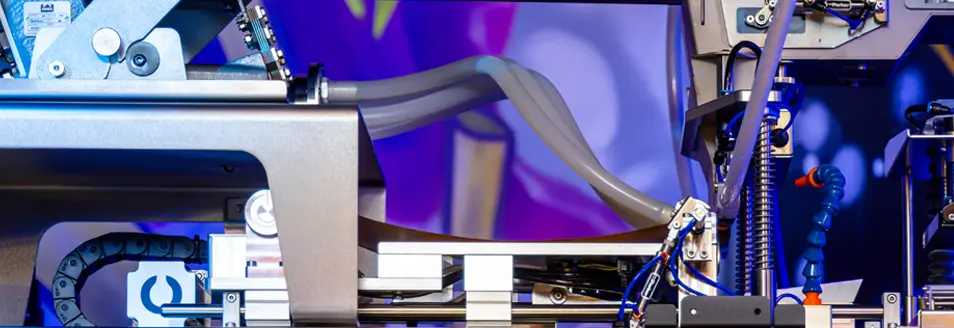
Advancements in technology and increasing market demand are continually influencing the future of pre roll automation. More sophisticated systems used to maintain efficiency and consistency are being adopted by manufacturers as the industry continues to mature.
Emerging trends in cannabis production automation trends include:
- AI-driven quality control
Automated systems are being developed to detect defects and ensure uniformity across batches in real time. - Enhanced data tracking
Production performance insights are being provided with advanced analytics, which in turn helps operators optimize their workflows and reduce waste. - Modular system design
Businesses are able to adapt to changing market conditions with new machines that allow for easy upgrades and customization. - Improved material handling
Overall throughout is being increased and bottlenecks are being reduced with innovations in grinding, feeding, and packaging systems.
The manufacturing of cannabis products will continue to be shaped by pre roll machine innovation. Investing early on in automation is giving brands a better position to scale quickly and efficiently, all while maintaining high quality in their products.
Automation is a strategic investment that is not only increasing output, but also supporting long-term growth, operational stability, and providing a competitive advantage in a rapidly evolving industry.