The History of Cannabis Culture in the USA: From Counterculture to Modern Lifestyle
Cannabis culture is the collection of traditions, language, music, art, rituals, and communities that have grown around cannabis over time. In the United States, that culture has changed dramatically over the last four centuries. What began with colonial hemp farming eventually evolved into an underground counterculture, then into today’s legal cannabis market where wellness, lifestyle, and regulated retail all play a role.
Whether you’re wondering what is cannabis culture, researching the history of cannabis culture, or looking for a complete cannabis history timeline, understanding where it all started helps explain where the industry stands today.
Table of Contents
- Cannabis Culture Timeline: Key Milestones
- Early Roots: How Cannabis Arrived in America
- Jazz, Prohibition and the Reefer Madness Era
- Cannabis and the Counterculture Movements of the 1960s-70s
- Where 420 Came From
- The War on Drugs and Its Impact on Cannabis Culture
- The Legalization Era: From Prop 215 to Federal Rescheduling
- Cannabis in Music, Film and Pop Culture
- Modern Cannabis Culture: Lifestyle, Wellness and Community
- How Social Media and Technology Are Redefining Cannabis Culture
- Cannabis Culture Worldwide and the U.S. Influence
- The Pre-Roll: Cannabis Culture’s Modern Artifact
- Frequently Asked Questions
Cannabis Culture Timeline: Key Milestones
1619
Virginia required colonists to grow colonial hemp, creating one of the first cannabis-related laws in the New World.
1611
Hemp arrived in North America with the Jamestown colonists.
1631-1632
Massachusetts and Connecticut passed similar hemp cultivation laws.
1910s
Smokeable cannabis entered the U.S. through Mexican refugees following the Mexican Revolution and Caribbean sailors arriving in New Orleans.
1913
California became one of the first states to prohibit cannabis.
1937
The Marihuana Tax Act created the first nationwide prohibition framework.
1970
The Controlled Substances Act classified cannabis as a Schedule I drug.
1996
California voters approved Proposition 215, also called the Compassionate Use Act, creating the nation’s first state medical marijuana program.
2012
Colorado approved Amendment 64 and Washington passed Initiative 502, becoming the first states to legalize adult-use cannabis.
2014
Colorado opened the first licensed adult-use cannabis stores in the United States.
2018
The Farm Bill removed hemp from the Controlled Substances Act, while the FDA approved Epidiolex.
2026
FDA-approved and state-licensed medical marijuana was moved to Schedule III, while adult-use cannabis remained Schedule I under federal law.
Early Roots: How Cannabis Arrived in America
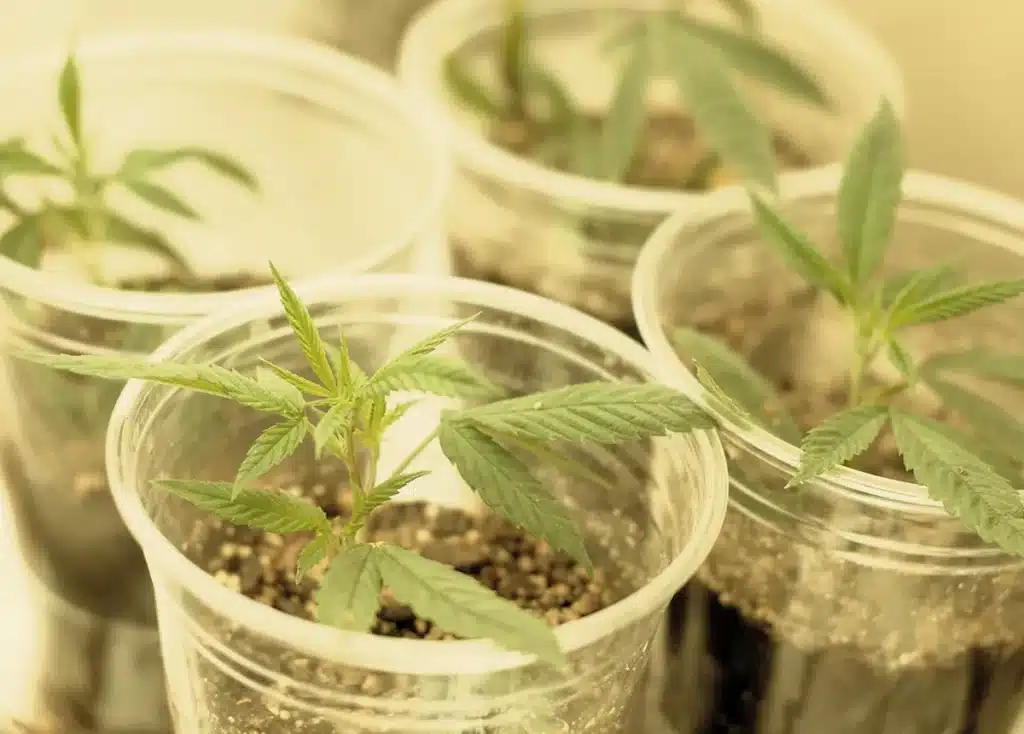
If you find yourself asking, when was weed discovered in America, the answer depends on which type of cannabis you’re talking about.
Hemp first arrived in North America around 1611 with the Jamestown colonists. It wasn’t brought here to smoke. It was an important agricultural crop used to make rope, sails, clothing, paper, and other everyday goods. In 1619, the Virginia Assembly passed a law requiring many colonists to grow hemp because it was considered economically valuable. Massachusetts and Connecticut adopted similar laws during the early 1630s. Even George Washington and Thomas Jefferson grew hemp on their farms, although historians generally agree they cultivated it for industrial purposes rather than recreational use.
That distinction is important because early colonial hemp wasn’t part of what we’d recognize today as weed culture, it was simply another useful crop in colonial America. Smokeable cannabis arrived much later in history.
During the 1910s, refugees fleeing the Mexican Revolution brought recreational cannabis traditions into the southwestern United States. If you’ve ever wondered who brought marijuana to the US, historians generally point to this wave of Mexican migration, along with Caribbean sailors who introduced cannabis into port cities like New Orleans. From there, it gradually became associated with musicians, artists, and working-class communities.
This period also introduced the word “marijuana” into American English. Before then, cannabis was usually discussed in medical or agricultural contexts. Using the Spanish term helped separate recreational cannabis from the familiar hemp crop, something that would later influence political messaging and public opinion.
These early decades laid the foundation for the history of cannabis in the US. Long before legalization debates or dispensaries existed, cannabis had already become intertwined with immigration, labor, regional culture, and music.
If you’re interested in how the joint itself became one of cannabis culture’s most recognizable symbols, check out the origin story of the joint.
Jazz, Prohibition and the Reefer Madness Era

By the 1920s, cannabis had found a home in America’s jazz scene. Cities like New Orleans, Chicago, and New York became cultural hubs where musicians gathered after performances in informal clubs sometimes called “teapads.” Cannabis wasn’t viewed as a political symbol yet. For many artists, it was simply part of creative and social life.
One of the most recognizable figures connected to this era was Louis Armstrong, who spoke openly about enjoying cannabis throughout much of his life. He even referred to it affectionately as “gage,” a common slang term at the time.
Public opinion shifted dramatically during the 1930s. As cannabis became more visible, newspapers increasingly connected it with crime, violence, and moral decline. Much of that messaging was driven by sensational headlines rather than scientific evidence. Harry J. Anslinger, who became the first commissioner of the Federal Bureau of Narcotics in 1930, became one of the most recognizable public faces of federal cannabis enforcement.
The 1936 film Reefer Madness reinforced many of these fears by portraying cannabis users as unstable and dangerous. Although the movie would later become a cult classic because of its exaggerated claims, it reflected the broader anti-cannabis messaging of the time.
So when did weed become illegal in the United States? While some states had already banned cannabis years earlier, the biggest federal turning point came when Congress passed the Marihuana Tax Act of 1937. Rather than banning cannabis outright, the law imposed taxes and regulatory requirements that made legal possession and distribution nearly impossible in practice. It marked the first nationwide restriction on cannabis in the United States.
It’s also worth mentioning that recent scholarship has added more nuance to this history. A peer-reviewed review published in Addiction in 2026 argues that Harry Anslinger’s role has sometimes been simplified in popular retellings. While he’s often portrayed as the driving force behind every aspect of federal prohibition and Reefer Madness, newer research suggests his involvement with the film and some parts of the broader narrative has likely been overstated. The result doesn’t erase his role in cannabis enforcement, but it does remind us that history is often more complicated than the stories we tell.
By the end of the 1930s, cannabis had shifted from a niche part of music culture to something many Americans associated with criminality, setting the stage for decades of prohibition.
Cannabis and the Counterculture Movements of the 1960s-70s

The cannabis counterculture of the 1960s permanently changed public perception of cannabis. Unlike earlier decades, cannabis wasn’t just something people used behind closed doors, it became closely tied to broader movements questioning war, government authority, consumerism, and traditional social expectations.
The Beat Generation helped pave the way during the 1950s through writers like Jack Kerouac and Allen Ginsberg. Their influence carried into the 1960s, when the hippie movement embraced cannabis alongside ideals of peace, artistic expression, environmentalism, and communal living. Large gatherings like Woodstock became symbols of this new generation. Cannabis use was often visible rather than hidden, making it one of the defining images of the era.
Hollywood reflected the cultural shift as well. The 1969 film Easy Rider portrayed cannabis alongside themes of freedom, rebellion, and life outside mainstream society. Rather than depicting users as criminals, it presented them as part of a broader cultural movement.
Music also played an equally important role. Artists including Bob Dylan, Jefferson Airplane, The Grateful Dead, and later Bob Marley all became connected with cannabis in different ways. Their influence reached millions of listeners and helped normalize cannabis within music culture, even while it remained federally illegal.
In 1970, Congress passed the Controlled Substances Act, placing cannabis in Schedule I, the category reserved for drugs considered to have a high potential for abuse and no accepted medical use under federal law. That classification still shapes cannabis policy today, although parts of medical marijuana regulation have changed in recent years.
Cannabis media also began to emerge. When High Times magazine launched in 1974, it gave cannabis enthusiasts something they had rarely had before: a publication devoted entirely to cannabis news, culture, activism, and lifestyle. For many readers, it became the voice of the growing cannabis community.
This period transformed weed culture from scattered local communities into a recognizable national movement. Cannabis had become more than a plant. It had become part of music, politics, fashion, publishing, and youth identity.
Where Did 420 Come From?
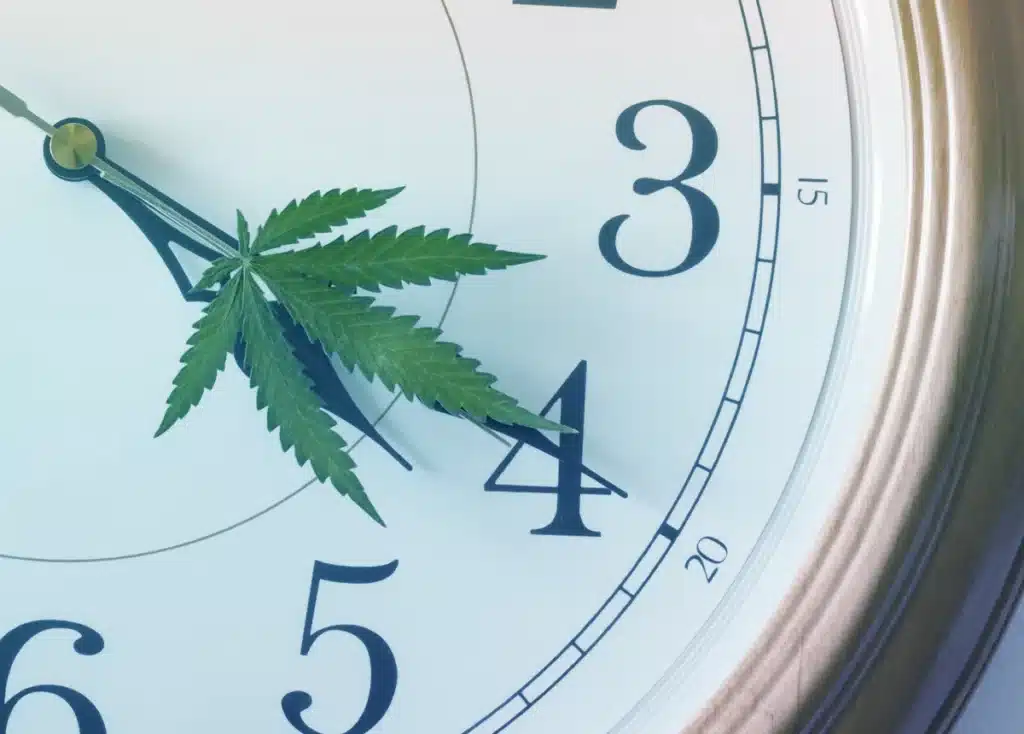
Almost everyone has heard the number 420, but its real origin is much simpler than the internet myths suggest. The story begins in the autumn of 1971 at San Rafael High School in California. Five friends who called themselves the Waldos agreed to meet after school at 4:20 p.m. beside the Louis Pasteur statue before searching for an abandoned cannabis crop reportedly growing near Point Reyes.
The crop was never found, but “420” became their shorthand for meeting up. One of the Waldos had family connections to people working with the Grateful Dead, helping the phrase spread through the band’s fan community during the 1970s. Over time, High Times magazine helped popularize the term nationally, eventually turning April 20 into an unofficial holiday recognized by cannabis enthusiasts around the world.
Despite decades of rumors, 420 is not:
- A police radio code for cannabis.
- A reference to Adolf Hitler’s birthday.
- The number of active chemicals in cannabis.
The real origin of 420 is simply five high school friends creating an inside joke that eventually became part of global cannabis culture.
The War on Drugs and Its Impact on Cannabis Culture
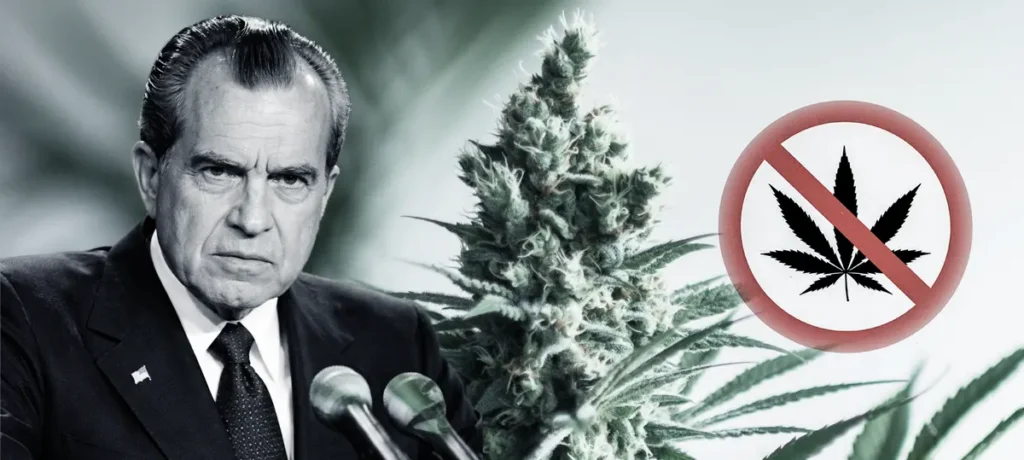
The momentum built during the counterculture era met a major obstacle in the 1970s. After the Controlled Substances Act placed cannabis in Schedule I in 1970, federal enforcement expanded significantly. A few years later, President Richard Nixon declared the War on Drugs, launching decades of policies that dramatically increased cannabis arrests and criminal penalties across the country. Cannabis culture didn’t disappear, but it went underground.
For many Americans, simply possessing marijuana carried the risk of arrest, job loss, or incarceration. Public consumption became increasingly secretive, and communities that had openly embraced cannabis during the late 1960s became far more cautious.
According to FBI Uniform Crime Report data compiled by NORML, marijuana arrests peaked at 872,721 in 2007. By 2023, that number had fallen to roughly 204,036 arrests, reflecting changing state laws and shifting enforcement priorities.
One of the lasting criticisms of the War on Drugs is that enforcement was far from equal. Numerous studies found that Black and Latino communities experienced disproportionately high arrest rates despite similar cannabis usage rates across racial groups. Those disparities became a major driver behind later decriminalization efforts and criminal justice reform.
At the same time, advocacy organizations such as NORML worked to educate lawmakers, challenge prohibition, and promote cannabis policy reform. What had once been viewed primarily as a criminal justice issue increasingly became a conversation about public health, personal freedom, and evidence-based policy.
Although these decades slowed public acceptance, they also strengthened the activism that eventually helped reshape cannabis laws across the country.
The Legalization Era: From Prop 215 to Federal Rescheduling
Many people assume cannabis legalization began during the early 2000s, but the real turning point came earlier. In 1996, California voters approved Proposition 215, officially known as the Compassionate Use Act. Passing with 55.6% of the vote, it became the first state law allowing the medical use of cannabis under state regulations.
That single ballot initiative changed the national conversation. Over the following decade, additional states adopted medical marijuana programs, creating a growing patchwork of state laws that challenged federal prohibition.
The next major milestone came in 2012, when Colorado voters approved Amendment 64 and Washington voters passed Initiative 502, making them the first states to legalize adult-use cannabis. Colorado opened the nation’s first licensed adult-use cannabis stores on January 1, 2014, proving that a regulated retail market could operate at scale.
Another important milestone arrived in 2018 with passage of the Farm Bill, which removed hemp from the Controlled Substances Act. The same year, the FDA approved Epidiolex, the first prescription medication derived directly from cannabis.
Federal policy continued evolving. In December 2025, President Biden signed an executive order directing additional review of federal cannabis policy. Then, in April 2026, the Acting Attorney General signed the final order moving FDA-approved and state-licensed medical marijuana to Schedule III.
That change did not legalize cannabis federally. Instead, it created a two-tier system. Certain qualifying medical cannabis products moved to Schedule III, while adult-use cannabis and most commercial cannabis products remained classified as Schedule I. Additional DEA administrative hearings regarding broader rescheduling were scheduled to begin in June 2026.
As of 2026, 40 states plus Washington, D.C. have legalized medical cannabis, while 24 states plus D.C. have legalized adult-use cannabis.
Check out the differences between recreational and medical dispensaries. For readers interested in legalization outside the United States, we’ve also put together a guide covering cannabis legalization around the world.
Cannabis in Music, Film and Pop Culture
Cannabis has left its mark on nearly every corner of American entertainment. The connection began with jazz musicians like Louis Armstrong during the 1920s before expanding into folk, rock, reggae, hip-hop, film, and television.
The late 1960s saw films like Easy Rider present cannabis as part of youth rebellion and personal freedom rather than criminal behavior. By 1978, Cheech and Chong’s Up in Smoke had essentially created the modern stoner comedy genre, influencing decades of movies that followed.
Music continued driving cannabis culture forward. Bob Marley helped connect cannabis with Rastafari beliefs and reggae music, while artists including Cypress Hill and Snoop Dogg later made cannabis references a defining part of hip-hop culture.
Today, cannabis appears throughout mainstream entertainment in ways that would have been nearly impossible just a few decades ago.
If you’re curious about the difference between joints, blunts and spliffs, we’ve broken down how each became part of cannabis culture over time:
Modern Cannabis Culture: Lifestyle, Wellness and Community

Cannabis culture in the USA today looks very different from the underground communities that existed during prohibition. While cannabis still has recreational appeal, many consumers now approach it much like coffee, craft beer, or specialty wellness products. They’re interested in specific effects, product quality, cannabinoid content, terpene profiles, and responsible consumption.
Microdosing has become increasingly common among consumers looking for mild, predictable experiences rather than intoxication. The language has evolved, too. The stereotype of the irresponsible “stoner” no longer represents most legal-market consumers. Today’s cannabis audience includes professionals, retirees, athletes, veterans, medical patients, and first-time users looking for products that fit their lifestyles.
Licensed dispensaries have also changed the buying experience. Instead of underground transactions, consumers now shop in professionally designed retail environments where education, compliance, and product transparency are central to the experience.
This shift represents one of the biggest changes in the history of cannabis culture. Cannabis has gradually moved from a symbol of rebellion toward a more accepted part of everyday life.
How Social Media and Technology Are Redefining Cannabis Culture

Technology has made cannabis education more accessible than ever. Instead of relying on word of mouth, consumers can now research strains, cannabinoids, consumption methods, and product reviews before ever visiting a dispensary. Social media has played a major role as well. Although cannabis companies still face advertising restrictions on many platforms, creators, educators, and industry professionals continue finding compliant ways to share information about responsible consumption, policy changes, and new research.
Online communities have also helped reduce stigma. People who may have once felt isolated can now connect with others who share similar interests, ask questions, and learn from experienced consumers regardless of where they live. Technology hasn’t replaced in-person cannabis communities, but it has made them larger, more connected, and significantly more informed.
Cannabis Culture Worldwide and the U.S. Influence
American cannabis culture has influenced markets around the world, but every country has followed its own path. Some nations have focused on medical access, while others have prioritized decriminalization or adult-use legalization. Rather than repeating that information here, we’ve created a dedicated guide covering cannabis legalization around the world, including countries where cannabis is legal, decriminalized, or still prohibited. Even as policies differ, American music, film, branding, and consumer trends continue shaping how cannabis is viewed internationally.
The Pre-Roll: Cannabis Culture’s Modern Artifact
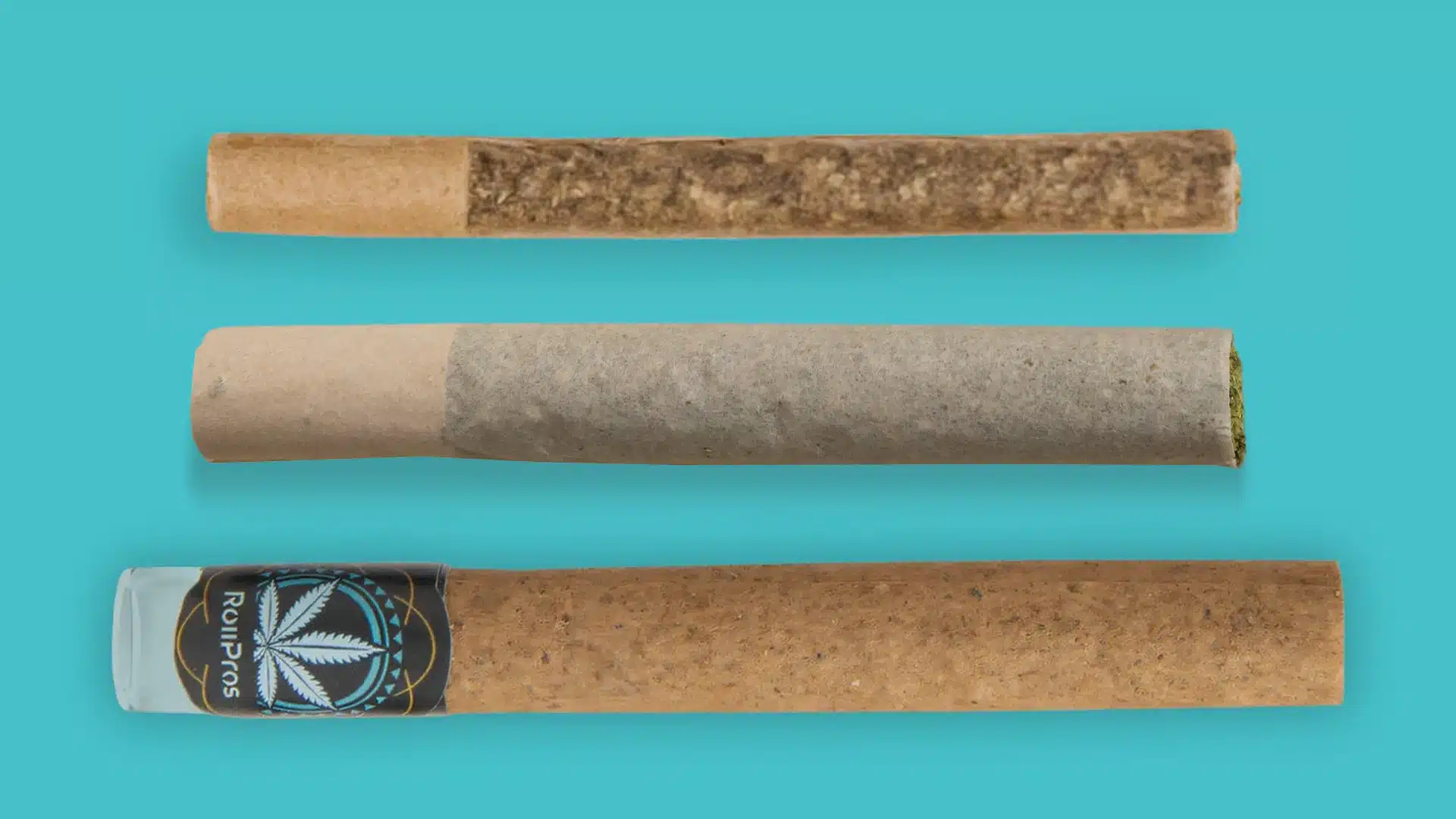
Throughout every chapter of cannabis history, one thing has remained remarkably consistent: the joint. From jazz clubs in New Orleans to music festivals in the 1960s and today’s licensed dispensaries, pre-rolls have remained one of the most recognizable ways people consume cannabis. The difference today is scale.
According to the Custom Cones USA State of the Pre-Roll Market Report 2026, pre-rolls became the top-selling cannabis category by unit volume in 2025, surpassing flower for the first time. The category generated $3.6 billion in revenue, sold more than 383 million units, captured 15.9% of the U.S. cannabis market, and grew 9.8% year over year, while unit sales increased 18.6% compared to overall market growth of just 1.5%.
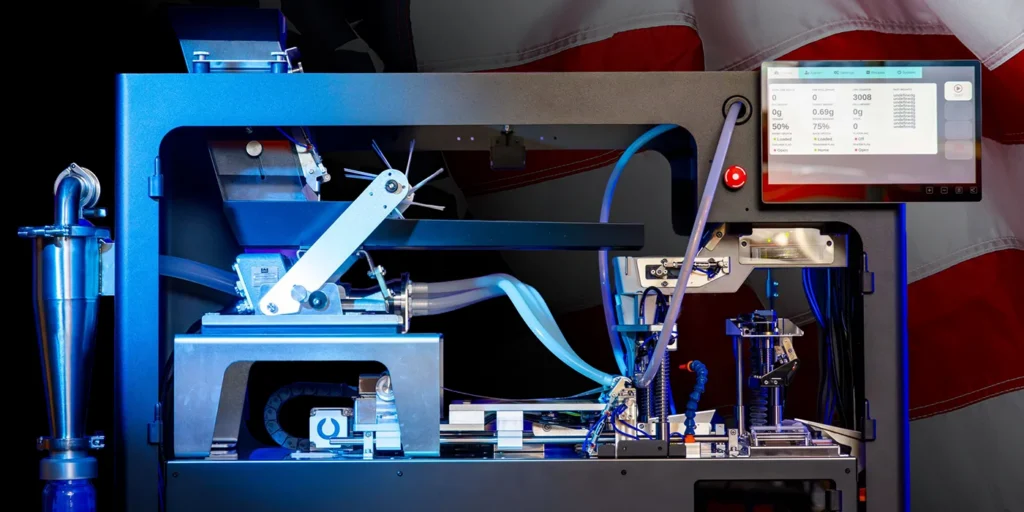
What was once rolled entirely by hand has become a carefully manufactured product designed for consistency, reliability, and quality. That evolution has created demand for better production equipment, including commercial cannabis grinder systems and automated pre-roll machines that help licensed producers deliver a more consistent experience at scale.
If you’d like to learn more, explore our guides to infused pre-rolls and how modern production technology supports today’s cannabis industry.
Frequently Asked Questions
Cannabis culture is the collection of traditions, language, music, art, social customs, and communities that have developed around cannabis use. It has evolved from underground counterculture into a mainstream lifestyle shaped by legalization, education, and regulated markets.
Hemp arrived with the Jamestown colonists around 1611 and was grown as an industrial crop. Smokeable cannabis didn’t become common in the United States until the 1910s, when it arrived through Mexican migration and Caribbean trade routes.
Federal prohibition began with the Marihuana Tax Act of 1937, which heavily restricted cannabis through taxation and regulation. The Controlled Substances Act of 1970 later classified cannabis as a Schedule I drug, reinforcing decades of prohibition.
The term “420” originated with five students known as the Waldos at San Rafael High School in California in 1971. They met at 4:20 p.m. to search for an abandoned cannabis crop. It is not a police code or a reference to Hitler’s birthday.
Legalization has shifted cannabis from an underground counterculture toward a regulated industry centered on education, product quality, wellness, and community. Licensed dispensaries and changing public attitudes have helped normalize cannabis for a much broader audience.
Yes. After the April 2026 Schedule III order, certain FDA-approved and state-licensed medical cannabis products moved to Schedule III, but adult-use cannabis remains federally classified as Schedule I.
Understanding the history of marijuana provides important context for where the industry is today. While the rituals, communities, and products have changed dramatically over time, one theme has remained consistent: people have always looked for better, more reliable ways to enjoy cannabis. As pre-rolls continue to become one of the industry’s fastest-growing product categories, consistency matters more than ever. If you’d like to see how today’s leading cannabis brands produce high-quality pre-rolls at scale, learn more about the Blackbird pre-roll machine and the technology helping shape the next chapter of cannabis culture.