
Is Weed Legal in Ohio? (2026 Laws, Limits & What SB 56 Changed)
Last updated: August 2026
This article is for educational purposes only and isn’t legal advice. Verify current requirements with the Ohio Division of Cannabis Control or a licensed Ohio attorney. Cannabis also remains federally restricted in some circumstances.
Yes, recreational marijuana is legal in Ohio for adults 21 and older. But if you’re asking is weed legal in Ohio in 2026, there’s an important catch: Senate Bill 56 changed a large part of the state’s adult-use framework on March 20, 2026.
- Adults 21+ can possess up to 2.5 ounces of marijuana plant material or 15 grams of extract.
- Adults can grow six plants each, with a 12-plant household maximum.
- SB 56 added new rules around product origin, transportation, public use, home grow, hemp-derived THC and more.
If your understanding of Ohio weed laws comes from Issue 2 in 2023, some of what you remember is now outdated.
Jump to:
- Is Weed Legal in Ohio in 2026?
- Issue 2 and Senate Bill 56
- Possession Limits
- Home Grow
- Where You Can Smoke
- Driving and OVI
- Delta-8, THCA and Hemp
- Federal Marijuana Law
- Penalties
- Expungement
- Medical vs. Adult-Use
- Dispensaries, Taxes and Local Bans
- FAQ
Is Weed Legal in Ohio in 2026?

The answer is, yes for adults 21 and older, while registered patients can also access medical marijuana.
Adult-use sales began August 6, 2024, but the legal framework changed in 2026. Issue 2 originally created Ohio’s recreational system under ORC Chapter 3780. Senate Bill 56 repealed that chapter and moved adult-use marijuana into ORC Chapter 3796, Ohio’s Marijuana Control Law, effective March 20, 2026.
That’s a major distinction because plenty of older pages still cite Chapter 3780 as current law. It isn’t.
| Rule | Allowance | Adult-Use, 21+ | Medical Patient |
| Possession, flower | Yes | 2.5 oz | 90-day medical supply |
| Possession, extract | Yes | 15 g | 90-day medical supply |
| Daily purchase | Yes | Up to legal limit | Medical fill rules |
| Home grow | Yes | 6/adult, 12/household | Through adult-use rights if 21+ |
| THC cap, flower | Yes | 35% | 35% |
| THC cap, extract | Yes | 70% | 70% |
| Edibles | Yes | DCC limits apply | DCC limits apply |
| Excise tax | Yes | 10% | Exempt |
| Minimum age | Yes | 21 | 18 |
Ohio currently caps marijuana plant material at 35% THC and extracts at 70%.
How Ohio Got Here: Issue 2, Then Senate Bill 56

Ohio voters approved Issue 2, formally called An Act to Control and Regulate Adult Use Cannabis, on November 7, 2023, with 56.79% of the vote. Possession and home grow became legal on December 7, 2023, and recreational dispensary sales followed on August 6, 2024.
Then lawmakers rewrote a significant part of the program.
Senate Bill 56 passed the General Assembly in December 2025 and was signed with line-item vetoes on December 19, 2025. Most marijuana-related provisions became effective March 20, 2026.
The biggest structural change was simple: ORC Chapter 3780 was repealed, and adult-use cannabis was folded into Chapter 3796.
There was an effort to challenge SB 56 through a statewide referendum, but it failed to qualify for the ballot. Ohioans for Cannabis Choice announced on March 18, 2026 that it hadn’t gathered the required 248,092 valid signatures.
So if you see a page saying SB 56 is still waiting on a November 2026 referendum, that information is outdated.
How Much Weed Can You Legally Have in Ohio?
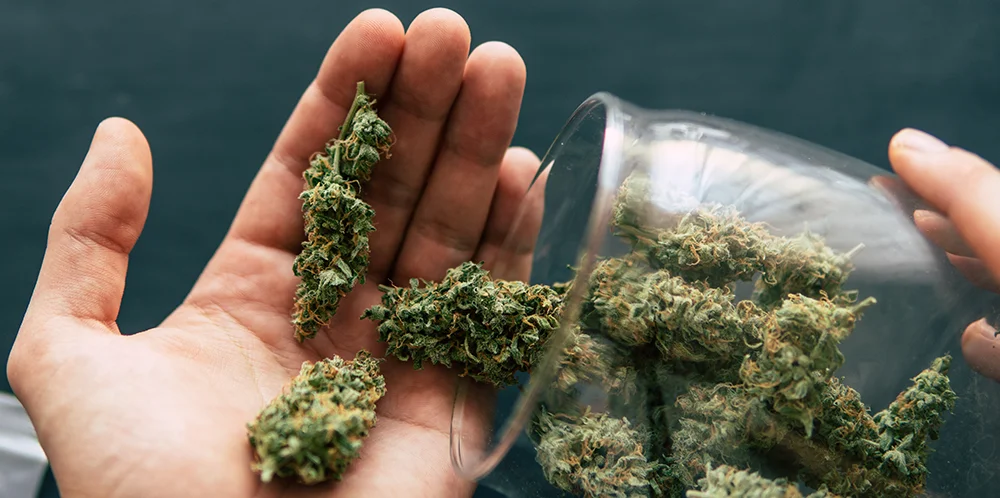
Under current Ohio weed laws, adults 21 and older can possess up to 2.5 ounces of marijuana plant material and 15 grams of extract.
That sounds straightforward, but SB 56 made the source of the marijuana more important.
Ohio’s adult-use protections apply to marijuana purchased through a licensed Ohio dispensary and marijuana legally grown at home under Ohio law. Marijuana bought in Michigan, Illinois or another state doesn’t automatically become lawful Ohio adult-use marijuana just because you’re under the possession limit.
Crossing a state line with marijuana also creates separate federal legal issues.
Transportation rules matter, too. Open marijuana products in a vehicle generally need to be stored in the trunk or, if there isn’t a trunk, behind the last upright seat. Edibles should remain in their original packaging when not being used.
So no, a legal possession limit doesn’t mean an open package can just sit in the cupholder.
Is It Legal to Grow Weed at Home in Ohio?

Yes it is, if you’re 21 or older. One adult can grow up to six plants at a primary residence. A household with two or more adults is capped at 12 plants total.
Plants must be kept in a secured closet, room, greenhouse or other enclosed area that prevents access by anyone under 21. They also can’t be visible from a public space through normal unaided vision. Landlords can prohibit home grow through a lease.
SB 56 also made exceeding the plant limit a bigger legal risk. Knowingly growing outside the allowed limits can expose someone to illegal cultivation charges under ORC 2925.04.
That’s stricter than the original Issue 2 framework, which gave people more room before cultivation penalties kicked in.
Homegrown marijuana is for personal use. It can’t be sold or transferred for compensation, and home growers can’t use prohibited hydrocarbon-based extraction methods.
Where Can You Legally Smoke in Ohio?
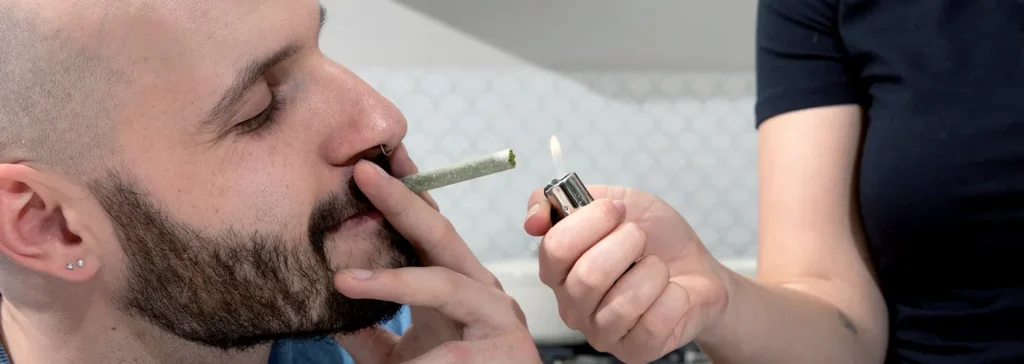
If you’re wondering if it is legal to smoke weed in Ohio, the answer is yes, but not in public.
Consumption is generally limited to privately owned residential property and certain privately owned agricultural property. Public use is prohibited.
In normal-person terms, smoking a pre-roll at your own home may be legal. Smoking one in a public park, on a sidewalk or on a restaurant patio is not.
Public consumption is a minor misdemeanor and can carry a fine of up to $150.
Marijuana use is also restricted in liquor-licensed establishments and places covered by Ohio’s indoor smoking laws. Renters should check their leases because landlords can prohibit smoking or vaping marijuana on the property.
Cars aren’t a workaround either. Smoking or vaping marijuana as a passenger in a moving vehicle can result in a third-degree misdemeanor.
Driving and Marijuana: Ohio’s OVI Rules

Legal marijuana doesn’t change Ohio’s OVI laws.
ORC 4511.19 includes marijuana-specific per se THC limits. A driver can violate the law with at least 2 ng/mL of marijuana in whole blood, blood serum or plasma, or at least 10 ng/mL in urine.
Separate thresholds also apply when THC is combined with alcohol and for certain marijuana metabolites.
One thing that matters after legalization: marijuana odor by itself doesn’t automatically prove impairment. Law enforcement still needs an independent factual basis before moving from noticing an odor to impairment testing.
The easier rule is simply not to drive after using cannabis.
Is THC Legal in Ohio? Delta-8, THCA and Hemp Products
This is where Ohio weed laws get especially confusing because marijuana and hemp rules shifted around the same time. Yes, but the product and where it’s sold matter.
SB 56 sharply restricted intoxicating hemp products after Gov. Mike DeWine’s October 2025 emergency action. Products involving cannabinoids such as delta-8, delta-9 and THCA can no longer be treated like ordinary retail hemp products when they meet Ohio’s intoxicating-hemp definition.
The law uses a 0.4 mg total THC per container threshold. Products above that level are pushed into the licensed cannabis system instead of ordinary retail stores.
Enforcement, including stop-sale orders and seizures, began March 20, 2026.
THC beverages didn’t get a separate exception. DeWine vetoed a proposed carve-out, so intoxicating hemp drinks are also restricted outside licensed dispensaries.
That means “hemp-derived” by itself doesn’t tell you whether a product is legal to sell in Ohio anymore.
What About Federal Marijuana Law?

Federal law is a separate issue, and 2026 added another layer of confusion.
A final rule effective April 28, 2026 moved marijuana in FDA-approved products and marijuana covered by qualifying state-issued medical marijuana licenses into Schedule III under the Controlled Substances Act.
That does not mean recreational marijuana became federally legal.
Ohio’s adult-use market remains outside that medical Schedule III pathway. Non-medical marijuana still isn’t federally authorized simply because Ohio allows adults to buy it.
A separate federal proceeding has also been considering whether marijuana more broadly should move from Schedule I to Schedule III. Hearings on that broader proposal began June 29, 2026.
Those two things shouldn’t be mixed together. One is an already-effective medical rule. The other is a broader rescheduling process.
Federal hemp law is changing separately again. Legislation signed November 12, 2025 redefines hemp using a total-THC approach that includes cannabinoids such as THCA and delta-8 and applies a 0.4 mg total THC per container limit to certain finished products. That change is scheduled to take effect November 12, 2026.
So there are really three overlapping systems to keep straight: Ohio marijuana law, Ohio intoxicating-hemp law and federal cannabis law.
Penalties: What’s Still Illegal in Ohio?
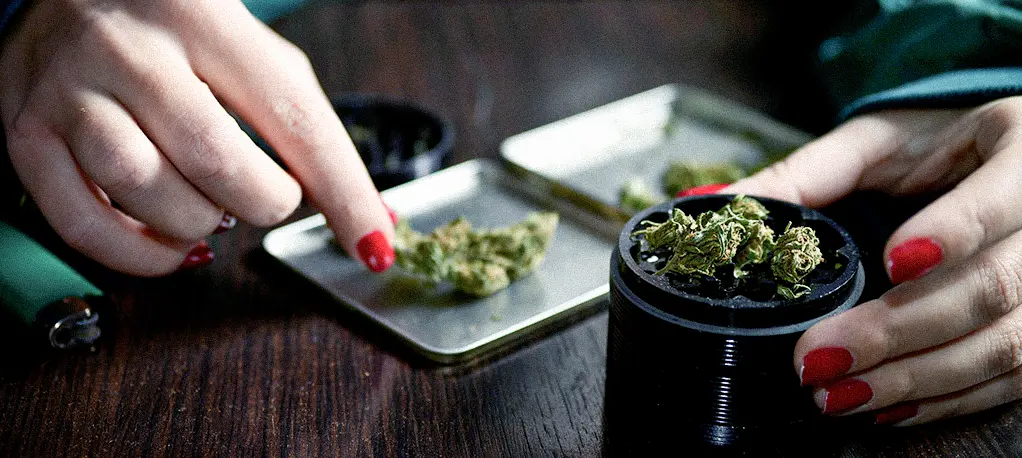
Marijuana is still legal in Ohio, but that doesn’t erase Ohio’s possession, cultivation, and trafficking statutes.
| Amount or Conduct | Charge | Maximum Penalty |
| Unlawful possession under 100 g | Minor misdemeanor | Up to $150 |
| 100 to less than 200 g | Fourth-degree misdemeanor | Up to 30 days / $250 |
| 200 to less than 1,000 g | Fifth-degree felony | Up to 12 months |
| 1,000 to less than 5,000 g | Third-degree felony | Felony penalties apply |
| 20,000 to less than 40,000 g | Second-degree felony | 5-8 years |
| Unlicensed sale | Trafficking, ORC 2925.03 | Depends on circumstances |
| Sale to someone under 21 | First-degree misdemeanor initially | Higher penalties may follow |
| Unlawful out-of-state product | Minor misdemeanor | Up to $150 |
The big takeaway is that “weed is legal” isn’t a blanket defense. Amount, source, age, location and what you’re doing with the marijuana can all change the legal result.
Can You Clear an Old Marijuana Conviction? Ohio Expungement Rules

One of SB 56’s most useful changes hasn’t gotten nearly as much attention.
Effective March 20, 2026, ORC 2953.321 created a process for expunging certain old marijuana and hashish possession records.
Eligible cases can include misdemeanor marijuana or hashish possession convictions, guilty pleas and dismissed charges involving conduct from before March 20, 2026. Certain felony hashish possession cases involving 15 grams or less may also qualify.
The process is application-based, not automatic.
An eligible person can apply without the ordinary waiting period used for many other record-clearing cases. The filing fee is $50, though it may be waived for indigency. The court schedules a hearing 45 to 90 days after filing, the prosecutor can object and the judge makes the final decision.
If granted, this is actual expungement rather than ordinary record sealing. The records are permanently destroyed.
Because the law only took effect in March 2026, anyone planning to apply should contact the clerk of the sentencing court to confirm how applications are currently being handled.
Medical vs. Adult-Use Marijuana in Ohio

Ohio’s medical program has been around since 2016, with sales beginning in January 2019.
Medical and adult-use marijuana now both fall under Chapter 3796, but the programs still aren’t identical.
| Rule | Medical Marijuana | Adult-Use Marijuana |
| Minimum age | 18 | 21 |
| Card/registration | Required | Not required |
| Qualifying condition | Required | Not required |
| Supply | 90-day supply | 2.5 oz flower / 15 g extract |
| Fill system | Two 45-day periods | Adult-use limits |
| 10% excise tax | Exempt | Applies |
| Home grow | Through adult-use rights if 21+ | 6/adult, 12/household |
Registered patients can maintain up to a 90-day supply, generally divided across two 45-day fill periods.
Ohio also recognizes a list of qualifying conditions under ORC 3796.01, including cancer, epilepsy, multiple sclerosis, PTSD, Crohn’s disease, Parkinson’s disease and chronic, severe or intractable pain.
SB 56 also narrowed several protections that had applied to adult-use consumers while medical patients retained certain patient-specific protections involving areas such as medical care and other legal decisions.
That means a medical marijuana card isn’t simply another way to buy the same products.
Buying Weed in Ohio: Dispensaries, Taxes and Local Bans

Adults 21 and older can buy recreational marijuana from licensed Ohio dispensaries. Many operate as dual-use dispensaries, meaning they’re authorized to serve both medical patients and adult-use customers.
As of the Division of Cannabis Control’s early-March 2026 reporting, Ohio had issued 204 dual-use dispensary certificates of operation.
SB 56 caps dispensaries at 400 statewide and adds buffer requirements involving other marijuana businesses and locations such as schools, playgrounds and churches.
Adult-use purchases carry a 10% excise tax in addition to Ohio’s 5.75% sales tax and applicable local taxes. Depending on location, total taxes can land around 15.25% to 17.5%. Medical marijuana is exempt from the 10% adult-use excise tax.
SB 56 also changed where the excise money goes. The law retained the 36% Host Community Cannabis Fund allocation while directing most remaining revenue elsewhere, including the general fund.
Local governments can still block adult-use businesses. As of June 3, 2026, 163 municipalities and townships had passed moratoriums, with 137 still active, covering about 14% of Ohio’s population.
Cities can ban dispensaries. They can’t simply ban the home-grow rights allowed by state law.
Ohio’s legal market has still grown quickly. Cumulative recreational sales passed roughly $1.09 billion by January 3, 2026, including about $836 million during 2025.
For a closer look at what’s actually selling, our breakdown of Ohio’s pre-roll market looks at category sales, brands and product trends. You can also explore our state-by-state cannabis market data for a broader comparison.
Ohio Weed Laws FAQ
How many marijuana plants can you grow at home in Ohio?
Adults 21 and older can grow six marijuana plants at their primary residence. Households with two or more adults can have no more than 12 total. Plants must be secured from anyone under 21 and can’t be visible from a public area.
Is it legal to smoke weed in public in Ohio?
No. Public marijuana consumption isn’t legal in Ohio. Violating the rule can result in a minor misdemeanor and a fine of up to $150. Legal consumption is generally limited to privately owned residential or certain agricultural property.
Can I smoke weed in my car in Ohio?
No. Marijuana can’t legally be consumed in a moving vehicle, including by a passenger. Passenger use can be a third-degree misdemeanor. Drivers are also subject to Ohio’s OVI rules, including the 2 ng/mL blood THC threshold.
Is delta-8 or THCA legal in Ohio?
Ohio restricted intoxicating hemp products beginning March 20, 2026. Products involving delta-8 or THCA that meet the state’s intoxicating-hemp definition are limited to the regulated cannabis system rather than ordinary retail stores.
What did Senate Bill 56 change?
SB 56 repealed ORC Chapter 3780 and moved adult-use marijuana into Chapter 3796. It also changed THC limits, home-grow enforcement, possession protections, transportation requirements, intoxicating-hemp rules and tax allocations.
Can I bring weed into Ohio from Michigan?
No. Marijuana legally purchased in Michigan doesn’t automatically qualify as protected adult-use marijuana in Ohio. Transporting marijuana across state lines also raises federal issues, regardless of whether you’re under Ohio’s possession limit.
Bottom Line: Is Weed Legal in Ohio for Recreational Use?
Yes, adults 21 and older can legally purchase and possess marijuana in Ohio, but the commercial landscape changed significantly in 2026 when Senate Bill 56 repealed ORC Chapter 3780 and moved Ohio’s adult-use and medical marijuana programs under Chapter 3796.
For cannabis businesses, that shift matters beyond the legal status of recreational marijuana. Manufacturers and processors now need to operate within the updated Chapter 3796 framework, including revised product, licensing, testing, packaging, labeling, and compliance requirements. Changes to intoxicating hemp and home-grow rules also create additional considerations for how products are sourced, manufactured, and brought to market.
The takeaway for Ohio cannabis operators is simple: the state still has a legal adult-use market, but the rules governing that market have changed. Businesses relying on older Ohio regulations, product specifications, or compliance guidance should make sure their processes reflect the current Chapter 3796 framework rather than the rules that were in place when Issue 2 first took effect.
Legal disclaimer: This article is for general educational purposes only and isn’t legal advice. Cannabis laws and administrative rules can change, and individual circumstances can affect how a law applies. Verify current requirements with the Ohio Division of Cannabis Control, the Ohio Revised Code or a licensed Ohio attorney. Marijuana also remains federally restricted, and federal treatment differs between qualifying medical marijuana and recreational marijuana.
Primary Sources
Ohio Revised Code Chapter 3796
Ohio Revised Code 3796.04
Ohio Revised Code 3796.221
Ohio Revised Code 2925.04
Ohio Revised Code 2925.11
Ohio Revised Code 2953.321
Ohio Revised Code 4511.19
Ohio Division of Cannabis Control
Ohio Senate Bill 56, 136th General Assembly
Federal Register, AG Order No. 6754-2026
U.S. Drug Enforcement Administration