Is Weed Legal in North Carolina? 2026 Laws, Penalties & What’s Changing
No, weed is not legal in North Carolina for recreational or comprehensive medical use in 2026. Marijuana remains illegal under state law, although small possession amounts carry lighter penalties. The main exception is the Qualla Boundary, where the Eastern Band of Cherokee Indians legally sells adult-use cannabis to people 21 and older.
Marijuana is regulated under the North Carolina Controlled Substances Act in Chapter 90, Article 5. North Carolina places marijuana in Schedule VI, the lowest level in its six-schedule controlled-substance system.
North Carolina cannabis laws get confusing fast. Marijuana is illegal, but hemp-derived THC products are widely sold. The state doesn’t have a comprehensive medical marijuana program, yet there is a narrow epilepsy exception.
On top of that, major state and federal hemp changes could reshape the market before the end of 2026.
Is Weed Legal in North Carolina Right Now?

So, is marijuana legalized in NC? No. Lawmakers have considered medical cannabis legislation several times, but none has created a statewide program.
Why Marijuana Is a Schedule VI Drug in NC
N.C.G.S. 90-94 lists marijuana and tetrahydrocannabinols in Schedule VI, with an important exception for THC in products containing no more than 0.3% delta-9 THC by dry weight.
That distinction is a big reason marijuana remains illegal while many hemp-derived THC products can currently be sold throughout North Carolina.
The One Statewide Medical Exception
North Carolina does have one extremely narrow exception for people with intractable epilepsy.
The Epilepsy Alternative Treatment Act allows qualifying patients to possess certain hemp extracts containing less than 0.9% THC and at least 5% CBD. This isn’t the same thing as a comprehensive medical marijuana program.
North Carolina Marijuana Possession Penalties in 2026
The North Carolina weed laws treat small possession amounts differently from larger quantities. N.C.G.S. 90-95(d)(4) sets the basic penalties.
| Amount | Charge | Maximum Jail | Maximum Fine | Statute |
| 0.5 oz or less | Class 3 misdemeanor | No active jail sentence for the marijuana charge | $200 | N.C.G.S. 90-95(d)(4) |
| More than 0.5 oz to 1.5 oz | Class 1 misdemeanor | Up to 45 days depending on prior record | Set by court | N.C.G.S. 90-95(d)(4) |
| More than 1.5 oz | Class I felony | Felony sentencing applies | Set by court | N.C.G.S. 90-95(d)(4) |
| More than 1/20 oz hashish | Class 1 misdemeanor | Misdemeanor sentencing applies | Set by court | N.C.G.S. 90-95(d)(4) |
| More than 3/20 oz hashish | Class I felony | Felony sentencing applies | Set by court | N.C.G.S. 90-95(d)(4) |
For half an ounce or less, any imprisonment sentence must be suspended and the maximum fine is $200. Possession above half an ounce becomes a Class 1 misdemeanor, while possession above 1.5 ounces becomes a Class I felony.
Marijuana Paraphernalia Charges
Marijuana paraphernalia is generally a Class 3 misdemeanor under N.C.G.S. 90-113.22A. Paraphernalia associated with other controlled substances is handled separately under N.C.G.S. 90-113.22 and can carry a Class 1 misdemeanor.
Sale, Delivery and Trafficking
Sale, manufacture and delivery can result in felony charges. Marijuana trafficking penalties begin at more than 10 pounds and include mandatory minimum prison sentences and fines that increase with the amount involved.
That threshold shouldn’t be confused with simple possession. You don’t need to possess 10 pounds before facing a felony because possession above 1.5 ounces can already qualify as a Class I felony.
Are There Penalties for Marijuana Possession in North Carolina?
Partially, but marijuana is still illegal. Possessing half an ounce or less is a Class 3 misdemeanor and doesn’t carry active jail time for that offense, but it can still create a criminal charge and record. That’s different from full decriminalization.
Some counties also deprioritize low-level marijuana cases, but prosecutorial discretion doesn’t change North Carolina marijuana law or make possession legal locally.
Hemp vs. Marijuana: Why THC Products Are Sold Legally Across North Carolina
This is where North Carolina cannabis laws become much less straightforward. North Carolina permanently removed hemp from its controlled-substances framework in 2022 through Session Law 2022-32.
The key phrase is delta-9 THC. That’s why asking if THC is legal in NC doesn’t have one simple answer. Marijuana-derived THC remains illegal, while products that qualify as hemp under the state’s delta-9 threshold can currently be legal.
Are Delta-8, Delta-10 and HHC Legal in NC?
Under current North Carolina law, qualifying hemp-derived delta-8, delta-10 and HHC products can generally be sold within the state’s hemp framework. That means North Carolina hasn’t legalized recreational marijuana, but consumers can still buy hemp products that may be intoxicating.
For more terminology, see our guide to THCA, delta-8 and other cannabis terms explained.
What About THCA Flower?
THCA is the acidic precursor to delta-9 THC. When heated through smoking or vaping, decarboxylation converts much of it into delta-9 THC.
North Carolina’s current hemp framework focuses on delta-9 THC concentration before consumption. That’s why high-THCA flower can currently be sold as hemp when it meets the applicable delta-9 threshold.
Testing creates another wrinkle. Gas chromatography heats a sample during analysis, which can convert THCA into delta-9 THC and has fueled legal arguments over how compliant hemp should be measured.
North Carolina’s Hemp Regulatory Void
The North Carolina Advisory Council on Cannabis identified major gaps in the state’s treatment of intoxicating hemp products in its April 2026 Interim Report.
North Carolina currently lacks the kind of comprehensive statewide licensing, potency, testing, labeling and track-and-trace system commonly found in regulated marijuana markets. That’s one reason lawmakers are considering HB 328.
The Practical Risk of THCA Flower
THCA flower looks and smells like marijuana. A police officer can’t necessarily determine whether flower is legal hemp or illegal marijuana without testing. That can create practical problems during stops, searches or seizures even when a consumer believes the product is legal hemp.
Why Are There Dispensaries in NC if Weed Is Illegal?
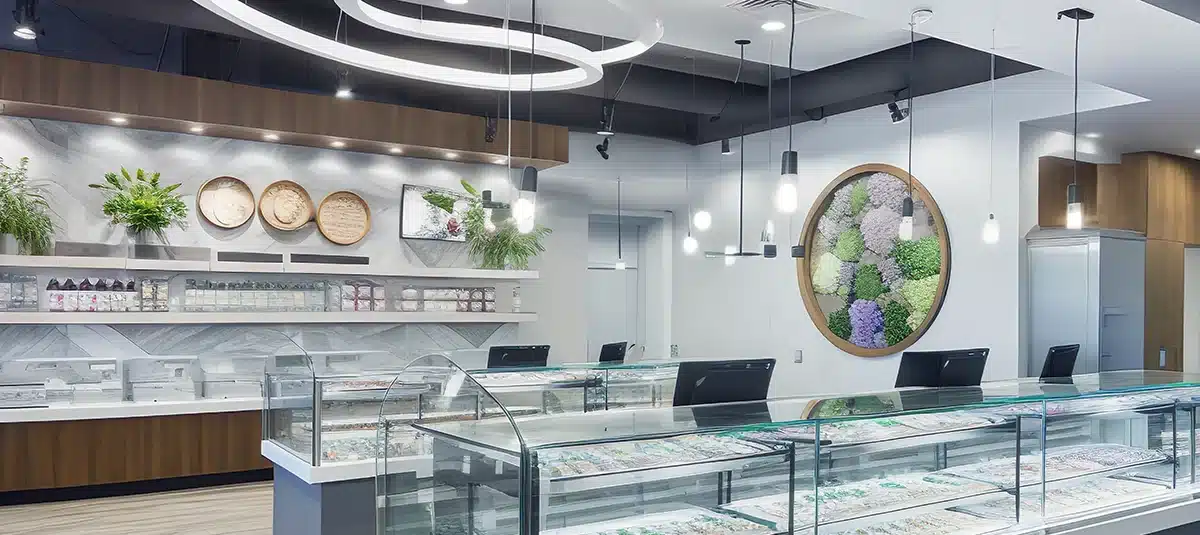
There are two different answers to why are there dispensaries in NC if weed is illegal. One is a sovereign tribal cannabis dispensary. The other is the large number of hemp retailers operating under North Carolina’s 0.3% delta-9 THC exception. They’re legally incredibly different.
Great Smoky Cannabis Co. and the Qualla Boundary
The Eastern Band of Cherokee Indians, or EBCI, is a federally recognized sovereign tribal nation. Its cannabis laws apply on the Qualla Boundary.
Great Smoky Cannabis Co., operated by Qualla Enterprises under the EBCI cannabis regulatory system, opened for medical sales on April 20, 2024. Adult-use sales expanded to tribal members in July 2024 and to all adults 21 and older on September 7, 2024.
That’s how North Carolina can have illegal recreational marijuana statewide while a legal adult-use dispensary operates inside its geographic borders.
The Jurisdictional Catch
The legality doesn’t follow customers off the Boundary. Once someone leaves tribal jurisdiction, North Carolina possession law applies again. A legal purchase from Great Smoky Cannabis Co. doesn’t create permission to carry marijuana elsewhere in the state.
Hemp “Dispensaries” Are Different
The CBD, delta-8 and THCA stores operating throughout cities like Raleigh and Charlotte aren’t part of the Cherokee cannabis program.
They’re hemp retailers selling products under North Carolina’s hemp laws. Calling both types of stores “dispensaries” is one reason the state’s cannabis rules can seem more contradictory than they really are.
Is Medical Marijuana Legal in North Carolina?

No, North Carolina still doesn’t have a comprehensive medical marijuana program.
The Compassionate Care Act’s Repeated Near-Misses
Medical cannabis legislation has been introduced several times.
Senate Bill 711 appeared during the 2021-2022 session. Senate Bill 3 later passed the Senate 36-10 in 2023 but didn’t become law.
The current version is House Bill 1011, the NC Compassionate Care Act. It was filed April 15, 2025 and referred to the House Committee on Rules, Calendar and Operations the next day. As of August 2026, it remains stalled there.
The proposal would create a regulated medical cannabis system for qualifying patients with specified serious medical conditions, but for now, it’s still only a proposal.
Is Recreational Weed Legal in North Carolina?
No, recreational weed is not legal in North Carolina outside the separate tribal system on the Qualla Boundary. North Carolina hasn’t approved an adult-use marijuana program, and no statewide recreational legalization bill has gained significant momentum in 2026.
Can You Smoke Weed in Public in NC?
No, if you’re asking is it legal to smoke weed in North Carolina, there’s no statewide public-consumption allowance. Private property also doesn’t create a general exception to the state’s marijuana-possession laws.
Can You Grow Marijuana at Home in NC?
No, North Carolina has no recreational home-grow allowance. Cultivation can instead fall under the state’s possession and manufacture laws.
What’s Changing in Late 2026?

Status as of August 2026
| Issue | Current Status |
| Federal hemp definition change under P.L. 119-37 | EFFECTIVE NOV. 12, 2026 unless changed |
| H.R. 6500 delay to Dec. 11, 2026 | PENDING |
| North Carolina HB 328 | PENDING |
| NC comprehensive medical cannabis | NOT LEGAL |
| NC recreational marijuana | NOT LEGAL |
| Broader federal marijuana rescheduling | PENDING |
This is the part of the law that could change fastest.
The Federal Hemp Reset
Congress changed the federal definition of hemp through P.L. 119-37, Section 781, signed November 12, 2025. Instead of relying only on delta-9 THC, the new framework moves toward total THC, including THCA, at or below 0.3% dry weight. It also creates a 0.4 milligram total-THC-per-container limit for finished hemp-derived cannabinoid products and addresses synthetic or chemically converted cannabinoids.
The changes are currently scheduled to take effect November 12, 2026. If they take effect as written, many products currently sold as intoxicating hemp would no longer fit within the federal hemp definition.
The August 2026 Attempt to Delay It
In August, the U.S. Senate passed H.R. 6500 with language that would delay most of Section 781’s new hemp restrictions until December 11, 2026. North Carolina Senator, Ted Budd, offered an amendment that would have kept the original timeline. The Senate voted 61-32 to table his amendment and later passed H.R. 6500.
The delay still requires House approval and the President’s signature. Until that happens, November 12, 2026 remains the operative federal date.
North Carolina’s Own Hemp Bill: HB 328
North Carolina lawmakers are also considering HB 328, which would create a new regulatory structure for hemp-derived consumable products. The conference version includes a 21+ age restriction and provisions tied to a 0.4 mg total-THC-per-container limit. It also contains rules affecting kratom and other regulated substances.
The North Carolina Senate adopted the conference report 37-6 on July 2, 2026. However, the House hasn’t adopted it. The bill was sent back to House Rules in late July and remained there as of August 2026. So despite plenty of discussion around HB 328, it has not become North Carolina law.
The State-Federal Conflict
North Carolina’s hemp definition isn’t automatically rewritten when Congress changes federal law. If the federal Section 781 changes take effect while HB 328 remains stalled, some products could fall outside the federal definition of hemp while still fitting North Carolina’s existing statutory definition. That could create a messy situation for retailers and consumers later this year.
Federal Marijuana Rescheduling
Federal marijuana scheduling is changing too, but that doesn’t legalize cannabis in North Carolina. In April 2026, Acting Attorney General Todd Blanche ordered certain FDA-approved marijuana products and qualifying state-licensed medical marijuana products moved to Schedule III. A separate DEA process considering broader rescheduling continued during the summer. North Carolina still needs its own state legislation before residents could participate in a comprehensive medical cannabis program.
Other Legal Consequences to Know
Possession isn’t the only issue under North Carolina weed laws. Driving while impaired by marijuana or another impairing substance is illegal under N.C.G.S. 20-138.1. North Carolina doesn’t use a simple legal THC threshold that makes impaired driving acceptable below a specific number.
Employment is another concern. North Carolina doesn’t provide broad protections for off-duty cannabis use, and employers may maintain drug-testing or zero-tolerance policies. THCA and delta-8 products can also trigger the same type of positive THC drug test as marijuana.
Federal restrictions still apply in areas including DOT-regulated employment and firearm possession by unlawful users of controlled substances.
Can You Clear a Past Marijuana Conviction in North Carolina?
Potentially, but it entirely depends on the situation.
Conditional Discharge Under G.S. 90-96
N.C.G.S. 90-96 provides a conditional-discharge process for certain first-time drug offenders. For eligible defendants, a court can defer proceedings and impose probation rather than immediately entering a judgment of guilt. Successful completion can lead to dismissal and may create an opportunity for expunction. Eligibility depends on the specific charge, criminal history and other circumstances.
Expunction Options
North Carolina also has expunction pathways for certain drug cases, including some dismissals and qualifying marijuana offenses. Because the state’s expunction laws have changed over time and eligibility is case-specific, anyone trying to clear an old marijuana case should review current North Carolina Judicial Branch guidance or speak with a licensed North Carolina attorney.
Where North Carolina Cannabis Laws Go From Here
North Carolina remains an unusual cannabis market in 2026. Marijuana is illegal, medical legalization continues to stall and recreational legalization isn’t gaining much ground. At the same time, hemp-derived THC products remain widely available and adult-use cannabis is legally sold on the Qualla Boundary.
The biggest near-term changes are likely to come from hemp regulation. The federal total-THC definition is scheduled to take effect in November unless Congress changes the timeline, while North Carolina lawmakers could still revisit HB 328.
For a broader look at legal cannabis markets, explore our pre-roll market data from states where cannabis is legal. Licensed operators can also read more about how licensed operators bring products to market.
Legal Disclaimer: This article is for general informational purposes only and isn’t legal advice. Cannabis and hemp laws are changing rapidly at both the North Carolina and federal levels. Verify current laws through official government sources or consult a licensed North Carolina attorney for advice about a specific situation.
North Carolina Marijuana Laws FAQ
Possessing half an ounce or less is a Class 3 misdemeanor with a maximum $200 fine and no active jail sentence for the marijuana offense. Possession above half an ounce becomes a Class 1 misdemeanor, while possession above 1.5 ounces becomes a Class I felony.
Yes, Great Smoky Cannabis Co. opened adult-use sales to all adults 21 and older on September 7, 2024. However, customers can’t legally carry marijuana off the Boundary under North Carolina state law.
No, marijuana possession remains illegal under North Carolina law regardless of where the product was purchased.
There’s no set date. Recreational legalization hasn’t gained significant momentum, the medical cannabis proposal remains stalled, and much of the state’s current legislative activity is focused on intoxicating hemp regulation.
Primary Sources
North Carolina General Statutes § 90-94, Schedule VI Controlled Substances
North Carolina General Statutes § 90-95, Violations and Penalties
North Carolina General Statutes § 90-113.22A, Marijuana Drug Paraphernalia
North Carolina General Statutes § 90-96, Conditional Discharge for First Offense
North Carolina General Statutes § 20-138.1, Impaired Driving
North Carolina Session Law 2022-32, Senate Bill 455
North Carolina House Bill 1011, NC Compassionate Care Act
North Carolina Senate Bill 711, NC Compassionate Care Act
North Carolina House Bill 328, Regulate Hemp-Derived Consumables