The cannabis industry continues to grow at an impressive pace, with new markets opening, consumer demand increasing, and innovation driving product diversity. Yet with this rapid expansion comes equally pressing challenges around sustainability, compliance, and operational efficiency. One of the most significant issues facing cultivators, processors, and manufacturers is waste. Every stage of the cannabis supply chain produces byproducts that must be carefully managed. From cultivation waste such as stems, leaves, and failed crops, to processing waste like leftover oils and extracts, to the packaging and flower loss common in pre-roll production, the volume of cannabis waste continues to rise alongside industry growth.

How to Reduce Waste in Cannabis Production
Adding to the challenge are strict regulations governing cannabis waste management. Unlike most agricultural products, cannabis cannot simply be composted or discarded. Waste must be rendered unusable, weighed, documented, and disposed of in compliance with detailed state and local rules. This creates additional costs, labor demands, and risks for businesses already operating in a highly competitive market with tight margins. Mismanagement of waste can lead to fines, legal consequences, or even the loss of a license, making effective systems non-negotiable.
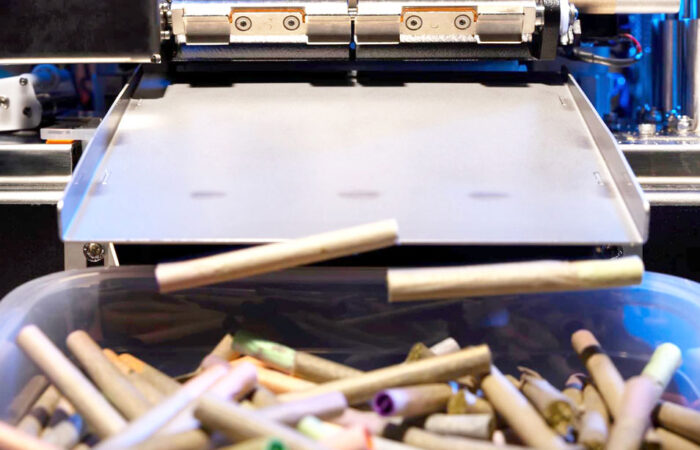
The encouraging news is that solutions are available. With efficient operational practices and advanced technology, businesses can cut waste significantly while improving compliance. Tools such as cannabis roller machines give operators the ability to minimize spillage, maximize product use, and streamline workflows. By combining automation with thoughtful sustainability initiatives, companies not only lower costs but also strengthen their reputation with consumers who increasingly value eco-conscious brands.
In this article, we will explore the full spectrum of cannabis waste challenges and solutions. From understanding where waste originates, to navigating regulatory complexities, to leveraging automation and best practices, we will outline practical steps businesses can take to reduce waste, protect profitability, and elevate overall production quality.
Understanding Cannabis Waste
Types of Cannabis Waste
Cannabis waste can be grouped into several categories. The most obvious is organic plant material, which includes stems, leaves, soil, and any portion of the crop that cannot be sold or processed into consumer products. During processing, additional waste appears in the form of extract byproducts and residual plant matter that cannot be used in concentrates or edibles.
Packaging is another major source of cannabis waste. Regulations often require products to be packaged in child resistant containers or sealed bags. While these rules protect consumers, they can lead to excessive plastic and cardboard use. Once multiplied across thousands of units, packaging waste quickly becomes a problem.
In pre-roll operations, flower waste is especially common. Manual rolling often leads to spillage, uneven weights, and rejected products. These inefficiencies add up, leading to significant product loss over time.


Sources Across the Supply Chain
Waste starts at the cultivation stage. Factors such as failed crops, pest infestations, and nutrient imbalances result in plants that cannot be sold. At the processing stage, trimming creates mountains of excess leaves and stems. Even though some of this material can be processed into extracts, large amounts are still discarded.
Pre-roll production is a particularly vulnerable point in the chain. Poorly calibrated equipment, hand rolling inconsistencies, and flower breakage all result in wasted material. Considering that high quality cannabis flower is one of the most expensive inputs, even a small amount of waste has a serious impact on profitability.
Environmental and Regulatory Concerns
Improper cannabis waste disposal harms both the environment and the industry’s reputation. Plant material that is not composted or handled correctly ends up in landfills, where it contributes to methane emissions. Packaging waste is often single use plastic, which adds to the global plastic pollution crisis.
From a legal standpoint, improper disposal can be devastating. Regulations require that cannabis waste be rendered unusable, usually by mixing it with other non-consumable materials like soil, food waste, or kitty litter. Every step must be tracked, documented, and available for inspection. Failure to follow these rules can lead to fines, suspension of licenses, or even permanent business closure.

Benefits of Waste Reduction
Cost Savings and Profitability
One of the most compelling reasons to focus on waste reduction is the direct financial impact. Every gram of flower that falls to the floor or is unevenly distributed into a pre-roll represents lost revenue. Disposal costs are another hidden expense. The more waste you generate, the more you pay to transport and process it. By streamlining production and reducing excess, companies can immediately lower operating costs and increase margins.


Compliance Advantages
Maintaining compliance with waste regulations becomes much easier when waste is minimized. Accurate tracking, reduced volume, and streamlined workflows mean fewer compliance headaches and less risk of regulatory action. Businesses that can demonstrate strong waste management practices often have an easier time passing inspections and renewing licenses.
Sustainability and Brand Reputation
Today’s consumers care deeply about sustainability. They want to purchase from companies that align with their values. Reducing waste is a visible, measurable way to show environmental responsibility. By investing in technologies that optimize flower use and minimize waste, companies send a strong message to their customers that they value both quality and sustainability.

Regulatory Challenges in Cannabis Waste Management
Strict Disposal Rules
Cannabis businesses face some of the strictest disposal regulations of any agricultural sector. Unlike other crops that can be composted or discarded with minimal oversight, cannabis waste must follow carefully monitored procedures due to its psychoactive properties and potential for diversion into the illicit market. Most states require operators to render cannabis waste unusable before disposal. This is typically done by mixing flower, trim, or extract byproducts with an equal or greater amount of non-consumable material such as food waste, soil, or paper. Once rendered unusable, the waste must be weighed, documented, and transported using approved vendors or methods. For large scale producers, these rules can add significant labor and logistical costs, making it critical to adopt streamlined systems for handling cannabis waste.


Tracking and Documentation Requirements
In addition to disposal, businesses must keep detailed records of every gram of cannabis waste. This is managed through seed-to-sale tracking platforms, which allow regulators to follow a product from cultivation through disposal. While these systems are designed to ensure accountability and prevent diversion, they add layers of complexity for operators. Inconsistent recordkeeping, clerical errors, or misclassified waste can trigger investigations or audits. For businesses already balancing tight margins, the cost of staff training and compliance oversight becomes another necessary but burdensome expense. Companies that adopt digital tracking tools and automation in their production often find it easier to stay accurate and compliant.
Risks of Non-Compliance
The risks of failing to comply with cannabis waste rules cannot be overstated. Penalties range from monetary fines in the thousands to suspension or permanent loss of a license, depending on the severity of the violation. In an industry where licenses are both expensive and difficult to obtain, non-compliance can be catastrophic. Even unintentional mistakes, such as improperly documenting a batch of cannabis waste, can draw regulatory scrutiny. Pre-roll manufacturers face unique risks since flower waste and packaging are frequent sources of error. Businesses that do not invest in training, standardized processes, or technology run the risk of jeopardizing their entire operation through preventable mistakes.


Pre-Roll Specific Waste Challenges
Pre-roll operations bring their own waste management difficulties. Each joint requires precision filling, consistent weights, and packaging that complies with strict child resistant standards. Meeting these requirements often results in excessive use of materials, which drives up costs and increases environmental impact. Plastic tubes, foil seals, and multi-layer cartons quickly accumulate as waste when production scales. Beyond packaging, flower waste is an ongoing challenge. Manual rolling methods frequently lead to spillage, uneven fills, and rejected products, all of which add up to costly losses. Incorporating a blunt roller machine helps mitigate these problems by providing accurate, repeatable rolling that minimizes flower loss. Over time, this precision not only reduces waste but also lowers compliance risks, since fewer rejected products mean fewer chances for errors in documentation.
How Automation Reduces Waste
Precision and Consistency
Automation is one of the most effective tools for reducing waste in cannabis production. An automated pre roll machine brings a level of precision and consistency that manual processes cannot match. Every joint is filled to the exact same weight and density, eliminating the inconsistencies that lead to spillage and rejected products.
Advanced Features
Modern automated machines, such as the RollPros Blackbird, include advanced features that further optimize efficiency. Adjustable settings allow operators to fine-tune the machine for different strains, moisture levels, and paper types. Data tracking provides detailed insights into production performance, helping companies identify inefficiencies and continually improve their workflows.


Example Workflows
In a manual pre-roll operation, flower is ground, weighed, and rolled by hand. This process is slow, inconsistent, and highly wasteful. In contrast, an automated machine grinds, measures, and fills joints in one streamlined process. Instead of losing grams of flower to spillage on a production table, the machine ensures that nearly every bit of product ends up in the finished pre-roll.
Scalable Efficiency
Beyond waste reduction, automation supports growth. A cannabis roller machine can easily scale to meet higher demand without sacrificing quality or consistency. This scalability ensures that companies can grow their business without generating unnecessary waste or taking on excessive labor costs.


Best Practices for Waste Management
Waste reduction in cannabis production requires a holistic approach that combines technology, training, and sustainable practices.
- Composting Plant Material
Instead of sending organic waste to landfills, businesses can compost stems, leaves, and other plant matter. This not only reduces environmental impact but also creates nutrient-rich soil that can be repurposed in agriculture. - Using Automation
Automated pre roll machines are essential tools for minimizing flower waste. Their precision filling technology ensures that every joint is consistent, efficient, and profitable. - Sustainable Packaging Choices
Packaging remains a challenge due to regulatory requirements, but businesses can choose recyclable, biodegradable, or reusable options. Exploring new packaging materials helps reduce waste while staying compliant. - Training and Compliance Systems
Employees should be trained to understand waste regulations and the importance of careful handling. Consistent compliance systems, backed by reliable technology, reduce errors and improve accountability.
By adopting these best practices, businesses can build a waste management strategy that reduces costs, protects the environment, and strengthens brand reputation.
FAQ
What is cannabis waste management?
Cannabis waste management is the process of handling byproducts from cultivation, processing, and sales in a legal and environmentally responsible way. It involves rendering waste unusable, documenting its disposal, and ensuring compliance with state and local regulations. Proper management protects both the environment and the long-term stability of cannabis businesses.
How do automated pre roll machines reduce waste?
Automated pre roll machines reduce waste by standardizing the amount of flower used in every joint. They eliminate spillage, overfilling, and underfilling, which are common in manual production. By precisely measuring and distributing flower, these machines maximize yield, lower costs, and create a more efficient operation.
Are blunt roller machines eco friendly?
Blunt roller machines are not eco friendly on their own, but they contribute to eco friendly practices by reducing the amount of flower wasted during rolling. Their precision ensures that businesses can make the most of their product while minimizing unnecessary loss, which indirectly supports sustainability goals.
What regulations govern cannabis waste?
Cannabis waste is governed by state specific regulations that typically require all cannabis byproducts to be rendered unusable before disposal. Businesses must also maintain accurate records through seed-to-sale tracking systems. These rules are designed to prevent diversion to the illegal market and ensure consumer safety.
How can small cannabis businesses manage waste?
Small businesses can take steps such as composting plant material, investing in a cannabis roller machine, and selecting sustainable packaging. Even small changes in production methods can significantly reduce waste and improve compliance. By starting with scalable technologies, smaller operators can build efficient waste management systems without overextending their resources.


Contact
+1 (360) 839-2690info@rollpros.com
 |

|
 |
 |
© RollPros, 2026