
Economic Impact of Automated Pre Roll Systems
The cannabis industry has grown rapidly over the past decade. As legalization spreads and consumer demand increases, producers face greater pressure to operate efficiently while maintaining product quality. One area where efficiency plays a critical role is pre roll production. Pre rolls have become one of the most popular product categories in legal cannabis markets because they are convenient, accessible, and easy for consumers to use.
Producing pre rolls at scale requires careful coordination between flower preparation, cone filling, inspection, and packaging. For many companies, manual production methods cannot keep pace with demand. Labor intensive processes can limit output, increase costs, and create inconsistent results. This is where automation begins to change the production landscape.

Modern automated systems allow cannabis businesses to produce large volumes of pre rolls with precision and consistency. By reducing manual steps and improving production speed, these machines support both operational efficiency and long term growth. The economic impact of automation in cannabis manufacturing continues to expand as more companies adopt advanced equipment and technology.
Understanding how automated systems influence production costs, labor dynamics, and market competition provides valuable insight into the future of cannabis manufacturing. Automation is not simply a tool for convenience. It has become a central driver of economic efficiency across the industry.
Introduction to Automated Pre Roll Machines
Overview of Automated Pre Roll Machines
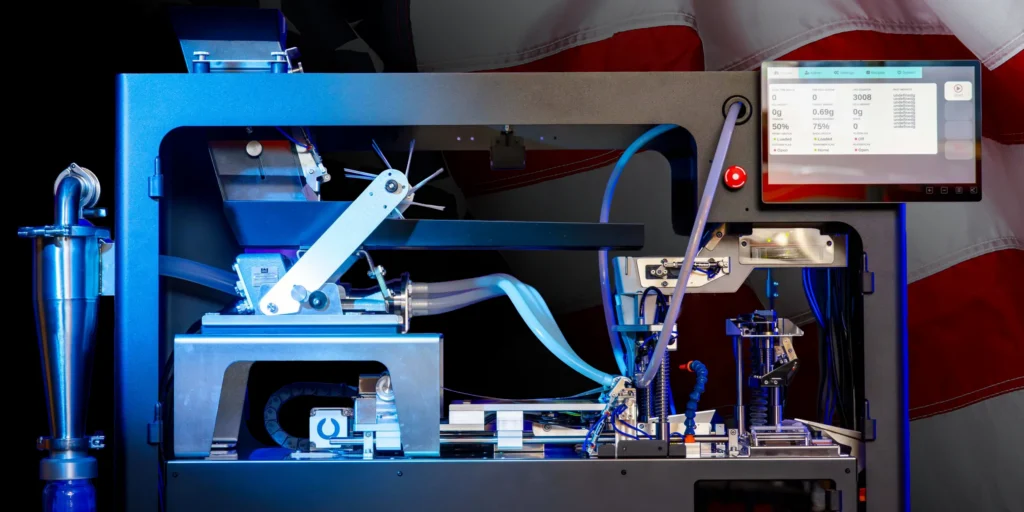
An automated pre roll machine is a piece of specialized equipment designed to streamline the process of filling and forming cannabis joints. These machines handle tasks that were traditionally completed by hand, such as filling cones with ground flower, compacting the material, and preparing the finished product for packaging.
In a manual environment, employees often fill cones individually or with basic tools. This process can be slow and may produce inconsistent results depending on operator skill. Automated systems introduce mechanical precision to the process. Machines can fill hundreds or thousands of cones within a short period of time while maintaining consistent weight and structure.
Several types of automated pre roll systems are available in the market today. These systems vary in size, capacity, and level of automation. Some machines focus primarily on cone filling while others integrate multiple steps into a single workflow.
Common types include:
- Cone filling machines designed for high volume production
- Multi station systems that fill, settle, and compact material
- Integrated lines that prepare pre rolls for packaging
- Equipment designed for both infused and non infused products
The development of pre roll automation closely follows the growth of the legal cannabis market. Early cannabis operations relied heavily on hand rolled joints created by production staff. While this method worked in small operations, it quickly became impractical as demand increased.
As legalization expanded in markets such as Colorado, California, and Oregon, cannabis producers began searching for ways to improve efficiency. Equipment manufacturers responded by developing automated systems specifically designed for cannabis production. Over time, these machines have evolved into sophisticated tools capable of supporting large scale manufacturing.
Today, automation has become a defining feature of modern cannabis production facilities.
How Automated Pre Roll Machines Work

Mechanism of Automated Pre Roll Systems
Automated pre roll systems are designed to replicate the steps involved in traditional joint production while improving precision and efficiency. Each stage of the process is engineered to ensure cones are filled evenly and consistently, helping create a more reliable final product. The process begins with properly prepared cannabis flower that has been ground to a consistent particle size and maintained at appropriate moisture levels. Proper preparation is important because it allows the material to flow smoothly through the machine and prevents clogs or uneven distribution during filling.
Once the flower is prepared, cones are placed into a loading tray where the system distributes ground material into each cone using a calibrated filling mechanism. Many machines use vibration or settling techniques to help the flower pack evenly and fill any empty space inside the cone. After filling, the machine compacts the material to reach the desired density so the finished pre roll burns evenly. Some systems also twist or cap the joints before they move to packaging. Throughout production, operators can monitor weight accuracy and adjust machine settings to maintain consistency across large batches. Compared with manual production, automated systems reduce small variations between joints and produce more predictable results across every run..

Manual production often involves the following characteristics:
Slower production speed
Hand filling cones requires significant time and effort from production staff. Even experienced employees can only produce a limited number of joints within a shift.
Greater reliance on employee skill
Manual processes depend heavily on the experience and consistency of each worker. Differences in technique can lead to noticeable variation between batches.
Higher variability in product weight and density
Hand packed joints often vary slightly in how tightly they are filled. These variations can affect burn quality and overall consumer experience.
Increased labor requirements
Manual production requires a larger workforce to meet demand. This can increase operational costs and make scaling production more difficult.

Automated production offers several advantages:
Consistent product output
Machines follow precise settings that remain stable throughout production. This helps ensure that each pre roll meets the same quality standards.
Higher production capacity
Automated systems can fill large numbers of cones in a short amount of time. This allows companies to meet growing demand without dramatically increasing labor.
Improved weight accuracy
Calibrated filling systems help ensure that each joint contains the correct amount of flower. Accurate weights are important for both compliance and customer satisfaction.
Reduced reliance on repetitive labor
Automation removes many of the repetitive tasks that slow down manual production. Employees can focus on monitoring machines and maintaining product quality instead.
These improvements help cannabis producers meet growing market demand while maintaining consistent quality standards across every production run.
Economic Impact of Automation on the Cannabis Industry

Direct Financial Impact
The adoption of automated production equipment represents a significant investment for cannabis businesses. Purchasing advanced machinery requires upfront capital, which can be challenging for companies operating in a competitive and highly regulated industry.
However, many producers find that the long term financial benefits outweigh the initial cost. The economic impact becomes clear when evaluating labor savings, improved production capacity, and reduced product waste.
Automated equipment allows companies to produce far more pre rolls in the same amount of time compared with manual methods. Higher output means businesses can meet market demand without expanding their workforce at the same rate.
A cost benefit analysis often reveals several financial advantages:
- Lower labor costs over time
- Increased daily production capacity
- Reduced product loss from inconsistent filling
- Faster order fulfillment for retail partners
For many producers, the return on investment becomes visible within a relatively short period. As production volume increases, automated equipment continues to deliver value through improved efficiency.
The economic impact of automation also extends beyond individual companies. When producers operate more efficiently, the entire supply chain benefits from increased stability and predictable production schedules.

Impact on Labor Market
Automation often raises questions about its effect on employment. Some people assume that machines will replace workers entirely. In reality, the relationship between automation and labor is more complex.
While automation reduces the need for repetitive manual tasks, it also creates demand for new types of roles within cannabis production facilities. Employees are needed to operate machines, monitor production performance, manage quality control, and maintain equipment.
As automation becomes more common, the workforce begins to shift toward specialized positions. Workers develop technical skills related to equipment operation, data monitoring, and production management.
This shift can provide long term benefits for employees by creating opportunities for skill development and career advancement. Instead of performing repetitive tasks, workers contribute to higher level operational functions.
Concerns about job displacement remain part of the conversation surrounding automation. However, many facilities find that automation allows them to expand production without dramatically increasing staffing levels. In this sense, technology supports business growth while maintaining a stable workforce.
Market Expansion and Competitive Advantage
The cannabis market is highly competitive, especially in mature states where dozens or even hundreds of brands compete for shelf space. Producers that operate efficiently have a clear advantage.
Automation allows businesses to scale production while maintaining consistent quality. When a company can produce large volumes of reliable products, it becomes easier to build strong relationships with distributors and retailers.
The impact of automation also appears in pricing strategy. Efficient production lowers operational costs, which allows companies to remain competitive without sacrificing profitability.
Automation also helps businesses respond quickly to market trends. If consumer demand for pre rolls increases, companies with advanced equipment can scale production faster than competitors relying on manual processes.
In this way, technology becomes a strategic tool for capturing market share.
Cannabis Industry Technology: The Future of Pre Roll Production

Advancements in Cannabis Industry Technology
Innovation continues to shape the future of cannabis manufacturing. Modern technology extends far beyond automated machines and now includes advanced monitoring systems, data analysis tools, and integrated production management software.
Many production facilities are beginning to incorporate artificial intelligence and machine learning into their operations. These technologies analyze performance data and identify patterns that may influence product quality or production speed.
Internet connected sensors also play a growing role in cannabis manufacturing. Equipment equipped with monitoring systems can collect real time information about temperature, vibration, and output rates.
This information allows operators to identify potential problems early and make adjustments before production slows down. These improvements contribute to the overall economic impact by preventing downtime and maintaining consistent productivity.
Cannabis technology also supports improved regulatory compliance. Digital monitoring systems can track production data and maintain accurate records, which helps companies meet reporting requirements in regulated markets.

Innovations in Automated Pre Roll Systems
Manufacturers continue to introduce new features that improve the performance of automated systems. The latest generation of equipment includes advanced capabilities designed to support large scale cannabis production.
Some modern machines offer:
- Real time monitoring dashboards
- Production data analytics
- Remote access and system diagnostics
- Automated alerts for maintenance needs
These innovations allow production managers to monitor operations closely and make informed decisions based on real data. Instead of relying on guesswork, teams can analyze performance trends and optimize their workflow.
Another important development involves improved flexibility. Many modern systems allow operators to adjust settings quickly to produce different joint sizes or accommodate varying flower textures.
These innovations demonstrate how industry technology continues to evolve alongside the needs of producers.
Conclusion: The Economic Transformation of Cannabis Production
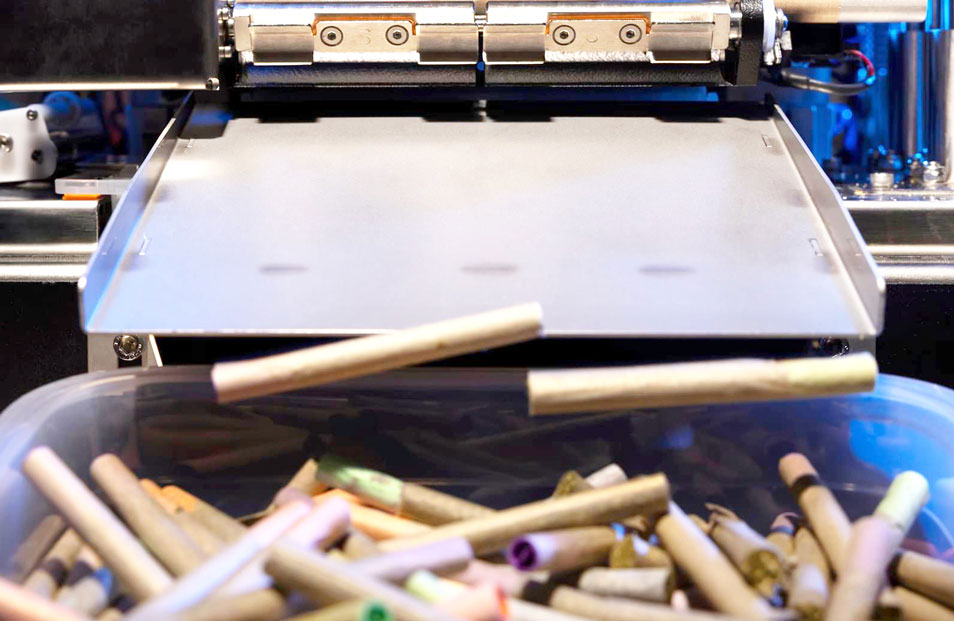
Automation has become one of the most important forces shaping the future of cannabis manufacturing. Automated equipment allows producers to increase efficiency, maintain product consistency, and scale operations in response to growing market demand.
The economic impact of automation is visible in several areas. Businesses experience lower operational costs, improved production capacity, and greater reliability in their manufacturing processes. These advantages support stronger financial performance and long term sustainability.
Automation also influences the structure of the workforce. As production facilities adopt advanced equipment, employees transition into roles focused on machine operation, quality control, and technical oversight.
Looking ahead, the role of cannabis industry technology will continue to expand. Advances in data analytics, artificial intelligence, and equipment design will further improve productivity across the industry.
For cannabis producers seeking long term success, embracing automation is no longer optional. It is a key component of efficient production and competitive growth in a rapidly evolving marketplace.