Tanana: The Adventure of Building a Pre-Roll Powerhouse in Alaska
How Sam Hachey and his team scaled consistency, quality, and statewide distribution—one joint at a time
In most states, growing cannabis is already complex. In Alaska, it’s a different kind of equation—remote communities, extreme weather, long-haul distribution, and a market shaped by zoning constraints and geography as much as demand.
For Sam Hachey, co-founder of Tanana Herb Co. in Fairbanks, that challenge is exactly the point.
“We’re lucky up here, man,” Sam says. “It’s a wild place. New obstacles pop up all the time, but you just figure out a way to get things done.”
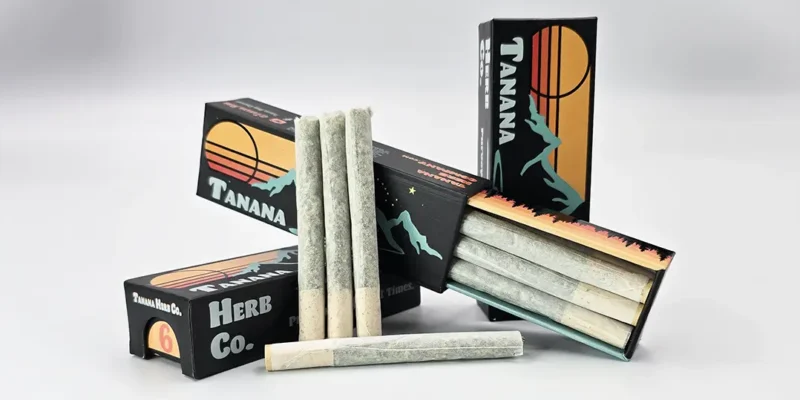
Today, Tanana is one of Alaska’s most recognizable cannabis brands—known for consistently high-quality pre-rolls, great indoor flower, and a culture built around doing things the right way. And in a state where reputation travels fast, consistency has become their strongest competitive advantage.
But while Will grew up in an atmosphere where cannabis use was normalized, and even celebrated, the life path he followed meant there wasn’t much space for personal exploration of the plant. “I chose law enforcement and military service as my careers, and because of those choices, I never had the opportunity to either try or work around this product. But I remember looking at this industry and going, wow, what an amazing business opportunity… for someone else.”
Building a Facility When the Rules Are Still Being Written
Tanana’s first facility wasn’t large—but what made it difficult wasn’t the size. It was the permitting.
Their original building measured about 3,200 square feet, but municipal restrictions meant growing beyond 1,500 square feet required special approvals.
So they adapted.
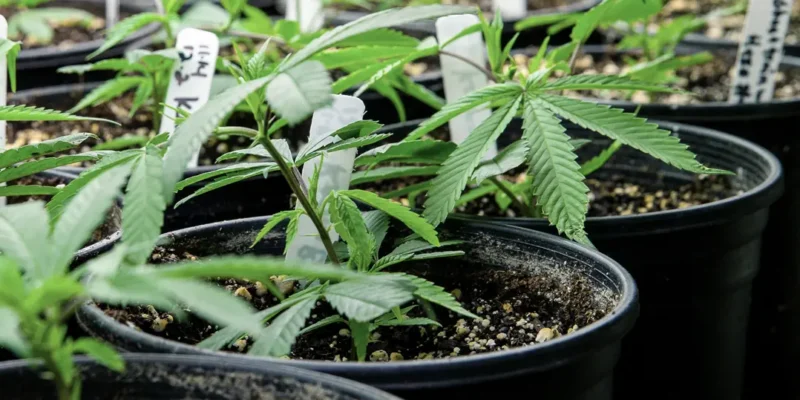
“We built walls inside… to make it 1,490 square feet,” Sam says. “Moved bathrooms, changed access points—everything.”
That early scramble wasn’t just operational. It was political, too. In the early years, public perception of cannabis was still shifting, and Sam remembers needing to reassure decision-makers that expansion didn’t necessarily mean “more grows”—it often meant simply creating functional processing and dry space.

Eventually the business expanded, but the volatility didn’t stop there. The following year, local politics nearly introduced a moratorium on cannabis.
“We had to campaign against it,” he says. “We made sure it didn’t pass.”
The result: Tanana survived the early turbulence—and continued building.
In 2018, the team made a major leap: purchasing a large building in downtown Fairbanks with the space to scale.
Alaska Market Reality: Distance, Logistics, and “Off the Road System”
Operating cannabis in Alaska is often framed as a lifestyle story. But for Tanana, the bigger reality is logistics.
“Our biggest market is 350 miles away,” Sam says, referring to Anchorage. “We drive down and back constantly—in negative 40 degree weather or in summer when it’s beautiful.”
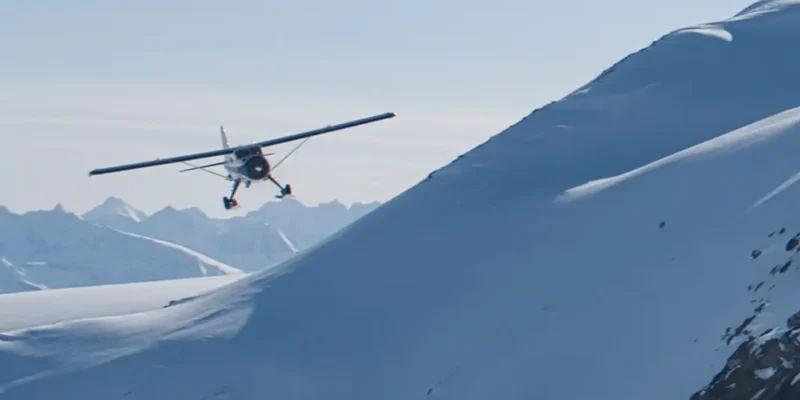
Flying is possible, but not always practical. Regulations require maintaining possession of product, meaning it can’t be checked like standard freight, and carry-on capacity limits what’s economically viable.
Even more challenging: many communities don’t have road access at all.
“We’re in stores statewide,” Sam explains. “About forty of them are off the road system.”
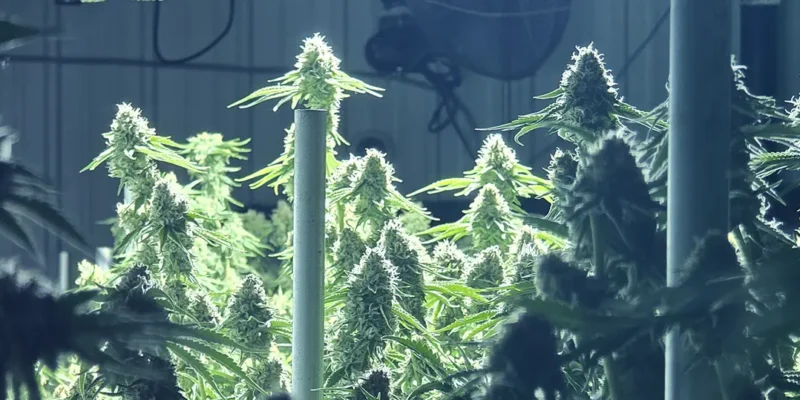
In some parts of Alaska, “distribution” means thinking beyond trucks.
“I mean helicopters, snowmobiles, ATVs… even dog sleds,” Sam says. “That’s just Alaska.”
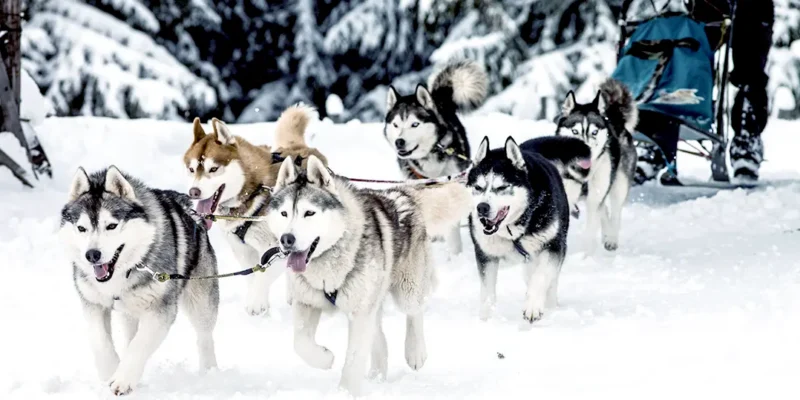
In remote regions, shoppers may travel into town, buy the daily limit, then head back out for weeks—sometimes with family members helping them stock up for long stretches of time.
“It’s like camping,” he says. “But people live that way.”
Why Tanana Bet Early on Pre-Rolls
While some brands treat pre-rolls as an add-on category, Tanana built them into the foundation of the business early.
“We knew immediately pre-rolls were going to be popular,” Sam says.
Today, pre-rolls represent roughly 35–40% of Tanana’s output, alongside premium flower and trim that supports other manufacturing partners.
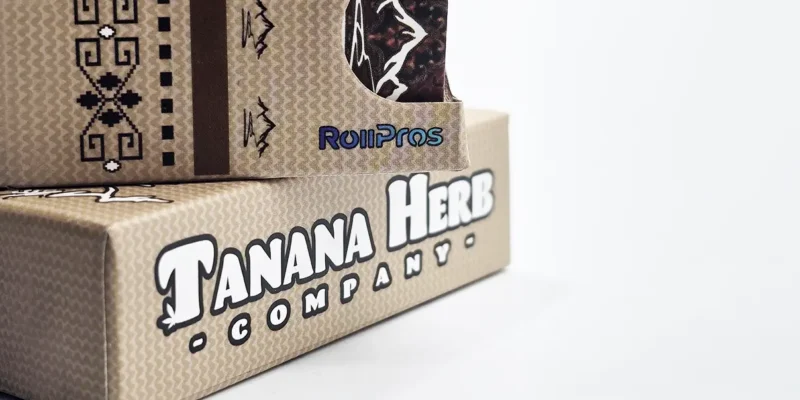
But the category wasn’t just a revenue channel—it was a reputation strategy.
“A lot of people produce bad joints,” Sam says. “And once a consumer buys one that’s trash, they’re done. They won’t buy again.”
In Sam’s view, consumer trust is fragile and reputation is everything—especially in a market like Alaska, where news travels quickly and the community is small.

“Alaska is a small world. Everybody knows everybody.”
That’s why Tanana made a clear decision early: never compromise on consistency, especially with pre-rolls.
“You’re only as good as your last bag,” Sam says.
Scaling Consistency with the RollPros Blackbird
For years, Tanana’s joints were built through more manual processes, including cone filling and knock-box style workflows. But as demand grew, Sam started looking seriously at automation.
He evaluated a wide range of machines but wasn’t convinced by most options.
“Too many moving parts,” he says. “Too many failure points.”
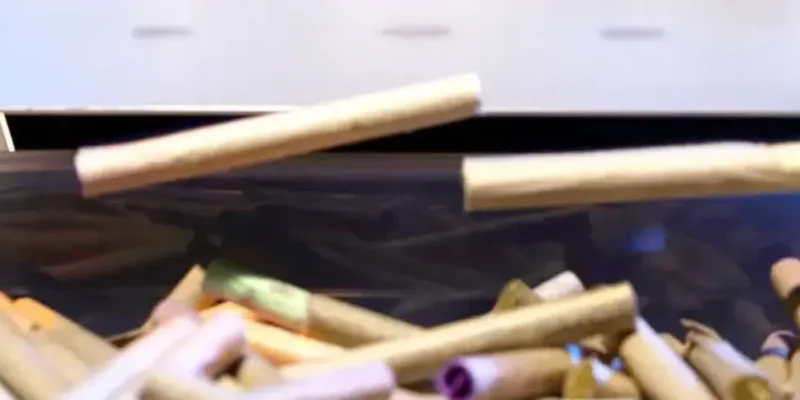
What stood out about the RollPros Blackbird was the outcome: consistent cylindrical joints that were actually rolled, predictable weight, and a reliable end product that felt truly scalable without compromising quality.
“The end product is my big thing,” Sam says. “These rolled, cylindrical joints… some of the best joints I’ve ever smoked.”
Just as important, the machine’s mechanical simplicity aligned with how Tanana thinks about production.
“It’s straightforward. Feed, vibrate, roll—it’s simple.”

Since adopting the Blackbird, Tanana has produced approximately 1.3 to 1.4 million joints, with weekly targets of 18,000–20,000 pre-rolls.
To support growth, the team is now building a dedicated production room—and plans to add additional capacity.
“We’re going to buy another one,” Sam says. “Probably put two in there. Right now we sell out every week. We are not producing enough to supply our demand.”
“Selling Weed in Alaska” Is Also About Culture
If Tanana’s story were just a scaling story, it would already be impressive. But what makes it memorable is how deeply the company’s identity is tied to place.
Sam didn’t move to Alaska to build a corporate footprint.
He moved to build something meaningful—and still have time to live.
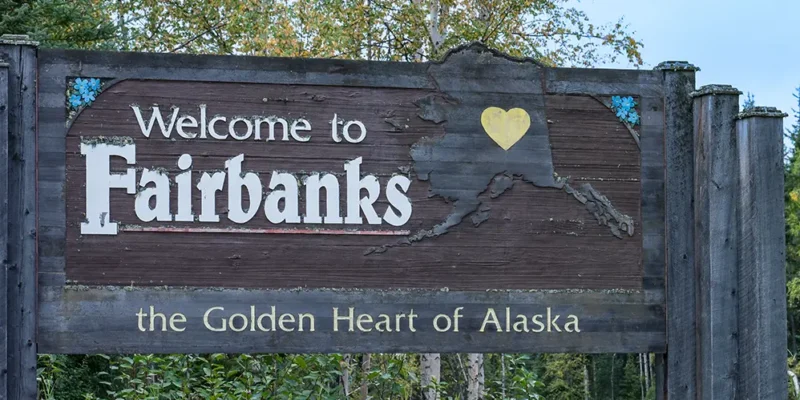
“I’m so eternally grateful,” he says. “I’m so happy to be growing weed in Alaska and doing this for a living… helping the 45+ families that depend on this company for their livelihoods.”
For Sam, cannabis is also an alternative to more damaging habits—especially in remote communities where alcohol can have harsher consequences.
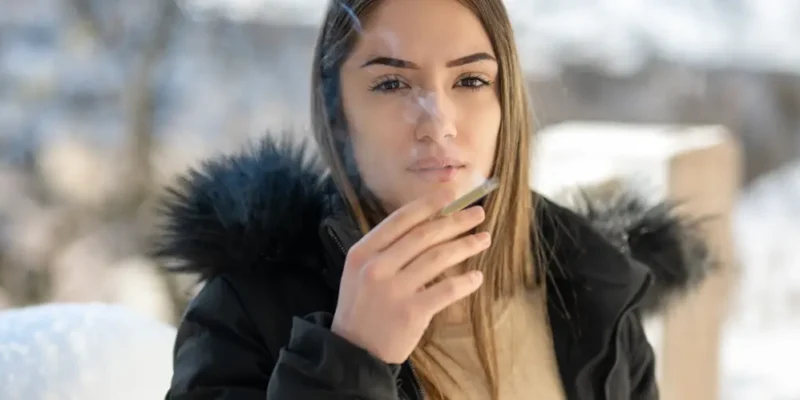
“People smoke instead of drinking, and we are seeing that more and more” he says. “I really believe it saves lives.”
When he talks about the future, the goal isn’t to become the biggest brand in the country. It’s to scale responsibly, protect quality, and keep the culture intact.
“Money can’t buy your time,” Sam says. “Time is the most important thing.”
Five Years Out: Bigger, But Still Tanana
When asked what Tanana looks like five years from now, Sam doesn’t hesitate.
“Bigger, faster, stronger,” he says. “But still consistent. And still Alaskan.”
He acknowledges the challenge of scaling without losing what made the brand strong.
“As you scale, things can get loose. Culture matters.”

He also keeps an eye on federal legalization and the likelihood that larger corporations will come knocking on the doors of smaller operators like Tanana. Sam’s stance here is clear, “we’ll never sell out, not for any reason or any amount of money.”
And, he believes Alaska has something many markets don’t: brand power.
“Alaska is adventure,” he notes. “Outdoors, excitement—wide open spaces.”
Sam sees long-term opportunity in building “Alaska-grown” into something distinctive: premium indoor flower and pre-rolls made in a place that customers already associate with something wild, rare, and real.
The Takeaway: Consistency and Quality Win Everywhere—Especially in Alaska
In a market shaped by weather, distance, and limited infrastructure, Tanana proves that sustainable success doesn’t come from shortcuts.
It comes from relentless consistency.
It comes from making a high-quality product that consumers trust.
And it comes from building a business that can scale without losing its identity.
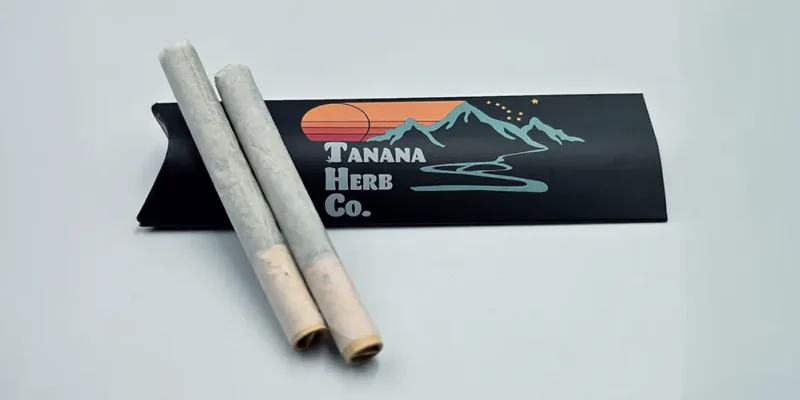
“You’ve got to be aware of the connections,” Sam says. “The universe provides—you just have to pay attention and take advantage of it.”
For Tanana, that mindset—and the ability to execute it under Alaska conditions—has made all the difference.